Klein of Tiszadob  ×  Weisz of Apagy

They tried to
erase us. We remain.

One family — carried out of Poland three centuries ago, driven into Hungary, and nearly destroyed in 1944. These are the people who lived, and the generations still here because some survived. Find your place among them.

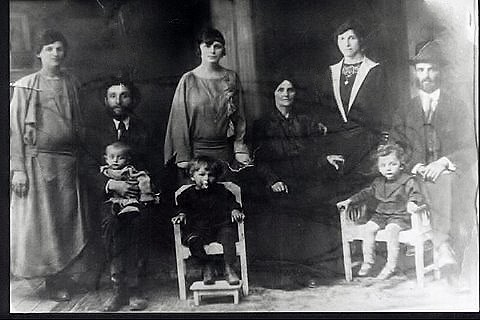
The Weisz and Feldman households of Apagy, c. 1922
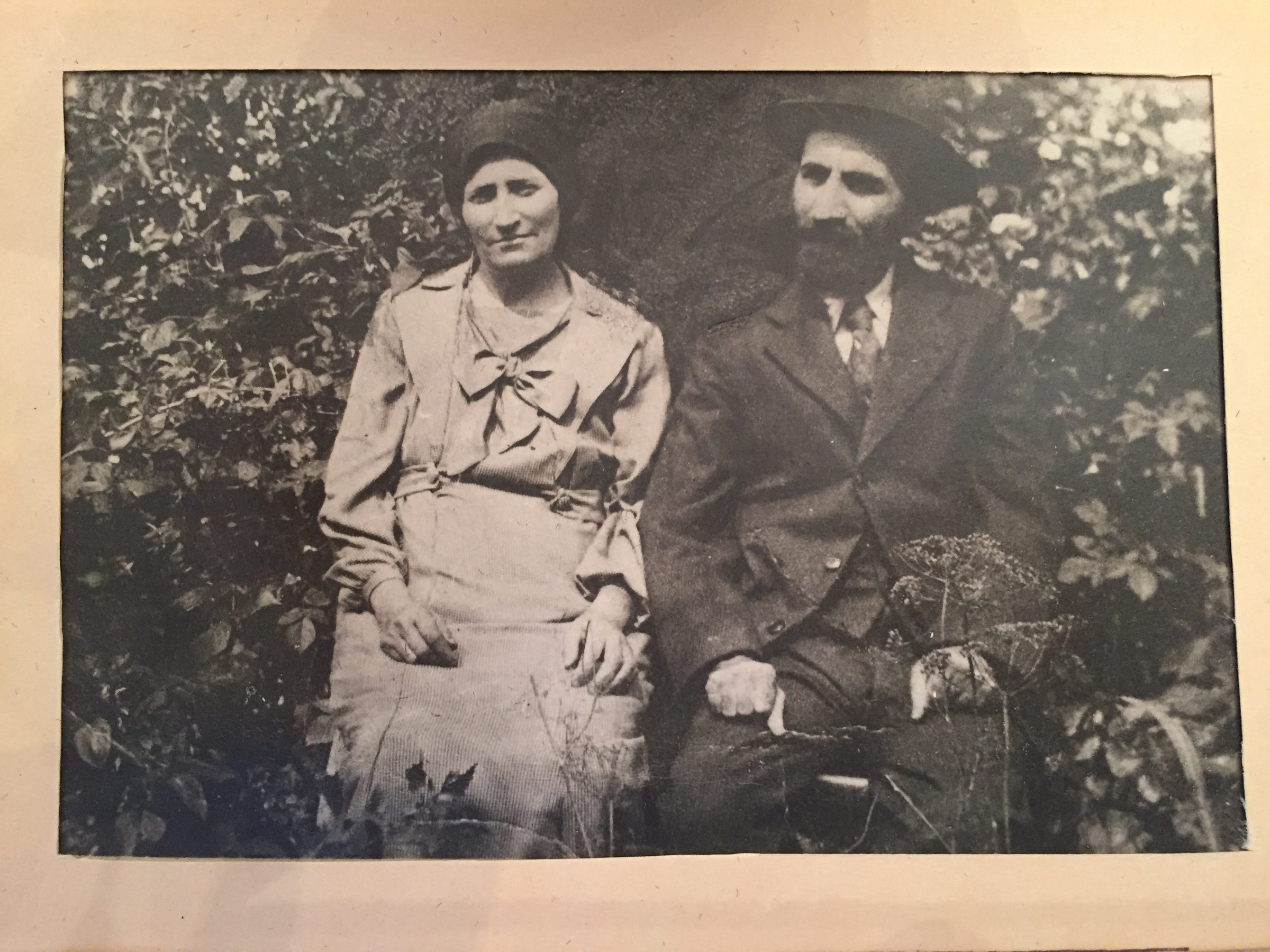
Emanuel and Lina Klein, Tiszadob
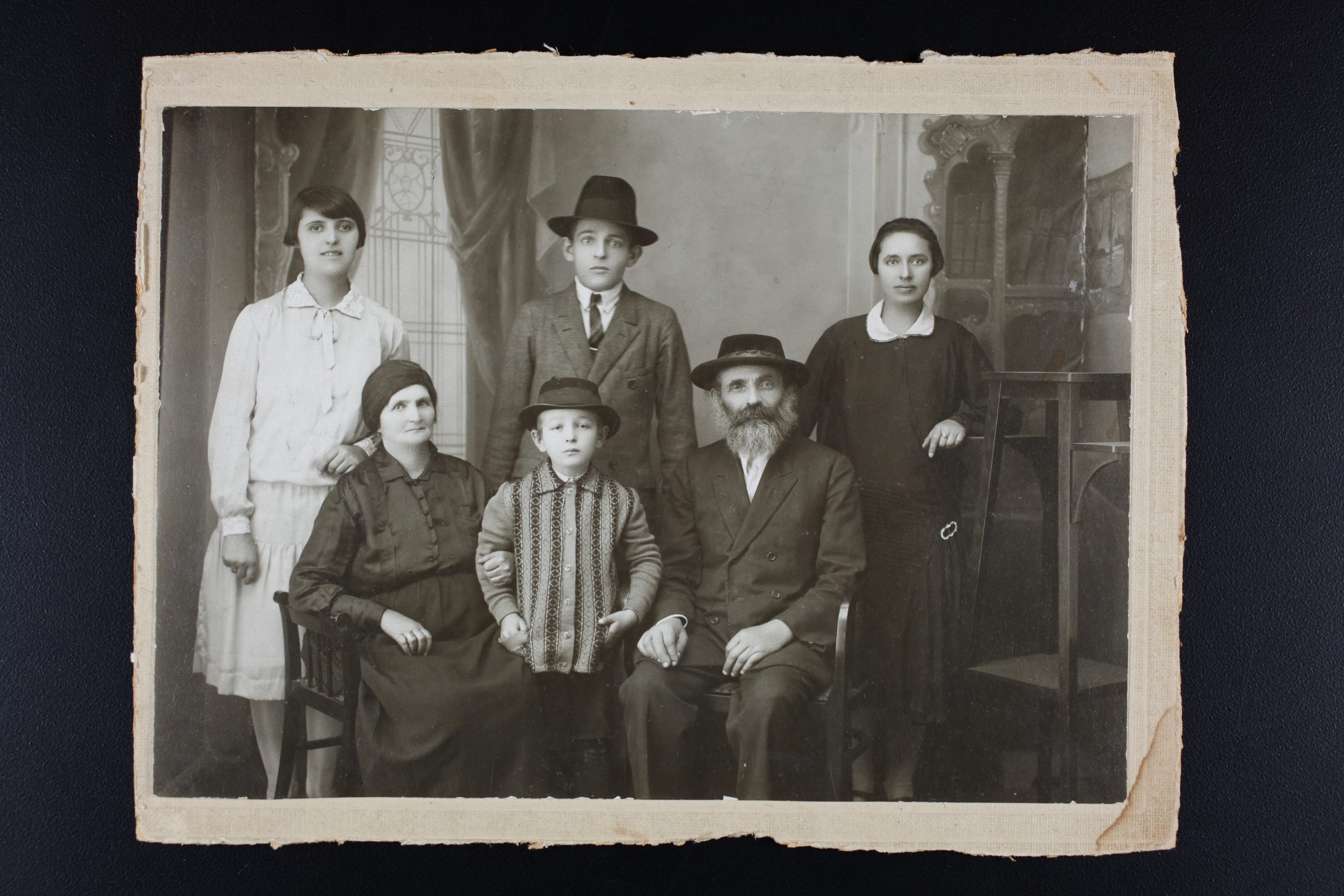
The Weisz family of Apagy, c. 1925
— THE ANCHOR PHOTOGRAPH —
Apagy, 1922

Two households, a generation before the rupture. Nearly every face leads somewhere in this archive.

The Nazis murdered most of this family in the spring of 1944. They did not end the line — and the family still here today is the proof.

— THE FIRST QUESTION ANYONE ASKS —

Who are these people to me?

Tell the archive who you are, then walk to anyone in the family. The path lights up — name by name — and names the exact bond between you.

A FEW YOU MIGHT NOT KNOW YOU'RE TIED TO

— these update to whoever you're viewing as —

— II —

The Story

What we know of the lives themselves

CHAPTER ONE Before Hungary — The 350 Years 1648 — 1820s

"My darling daughter Sandra — this is written by your mother, for you to know your roots, of witch you can be very very proud."

— Esther Weisz Schon, age 75 · Chicago · 15 December 1980 · read her letter →

· CHAPTER ONE ·

Before Hungary — The 350 Years

Bobby's aunt wrote it down in 1980. This is the part of the family's story that begins before any documented record begins.

Six lines from Esther's letter, page 1: 'My Father's forfathers came 350 years ago from Poland. I don't have to tell you why? They went to Germany. Changed the name from Cohn to Weisz. From Germany they went to Hungary, where my grandparents were born.'
— ESTHER WEISZ SCHON · CHICAGO · 15 DECEMBER 1980 · READ HER LETTER →

Three sentences. One paragraph in a four-page letter. This is the part of the family's story that begins before any documented record begins — and the only reason it is on this page at all is because she wrote it down.

The Weisz line, like nearly every Hungarian Jewish family in the northeastern counties, did not appear in those villages. They arrived. The first surviving stone — Lebli Weisz, born around 1833 in Petneháza — is not the start of the family. It is the part the family began writing down. Bobby's aunt knew that. She opened her letter with the part the records cannot reach.

What follows is what is reasonably known about the part the records cannot reach.

— MOVEMENT I —

The Polish century · "I don't have to tell you why"

She left the why as one sentence. I don't have to tell you why.

She didn't have to. Her father didn't have to. Their parents and grandparents and great-grandparents had grown up with the answer — they could feel it in the way the older men shook their heads when the subject came up. The forefathers came south because Poland had stopped being safe. It really had been that simple, and for ten generations it really had been that obvious.

In the early 1600s the Polish-Lithuanian Commonwealth held the largest Jewish world that had ever existed. Roughly half a million Jews lived there — more than in every Western European country combined. They lived in self-governing kehillos under a parliament of their own, the Va'ad Arba Aratzos — the Council of Four Lands — which met twice a year at the Lublin and Jarosław fairs and adjudicated everything from rabbinic appointments to communal taxation. The great yeshivos at Kraków, Lublin, Brisk, and Vilna educated the rabbanim who were sent across Europe. It was a self-governing Yiddish-speaking civilization inside another civilization, and for almost two centuries it functioned.

In 1648 it ended.

That spring, Bohdan ChmielnickiChmiel ha-rasha, "Chmiel the wicked," as the Jewish memory of him is recorded in selichos still printed in siddurim today — led a Cossack uprising in the Ukrainian provinces of the Commonwealth. The uprising was nominally against the Polish nobility, but the Jews stood directly in the line of fire for a specific structural reason: the Polish noble landlords had used Jewish arendarzy — leaseholders, estate managers, tax collectors, innkeepers — to run the day-to-day operation of their vast Ukrainian estates for the previous two hundred years. So when the Cossacks rose against the landlords, they rose against the Jews who served the landlords. Tens of thousands of Jews were killed. Hundreds of kehillos were destroyed. The entire Jewish belt across Volhynia, Podolia, and Ukraine was set on fire.

The Polish-Swedish wars of 1655–1660 — the Deluge — followed and emptied what remained. By 1670 the demographic center of Ashkenazi Jewry had begun its long westward drift. Survivors moved into Habsburg Moravia, Bohemia, and the German-speaking crownlands, and over the generations that followed, southward into the lightly populated counties of Hungary that had only recently been wrested back from a century and a half of Ottoman war.

Bobby's aunt wrote I don't have to tell you why because every Jew of her generation knew that the answer was Chmielnicki and the Deluge — the way every Jew of her generation knew what Tisha B'Av meant without being told. Chmiel ha-rasha was a name like Haman. The forefathers came south because Poland had stopped being safe to live in, and Hungary, which had been emptied by the Turks, was becoming safe enough to live in again.

That is the why. The chapter assumes it from here on.

— MOVEMENT II —

The German interlude · and the registrar's pen

Bobby's aunt's letter says next: they went to Germany.

The "Germany" she means is not modern Germany. It is the German-speaking Habsburg territories — Moravia, Bohemia, the Austrian crownlands, and after 1772, also Galicia. These were the lands directly west and southwest of the destroyed Polish-Jewish heartland, where the official administrative language was German, where the Yiddish-speaking refugees of 1648 could find footing under a different crown, and where Jewish communities had been long enough established to absorb the survivors. The family settled somewhere in that territory and stayed.

For roughly a hundred and fifty years.

That period — late 1600s to late 1700s — is the silence at the center of this chapter. Multiple generations of the family were born, married, and buried in those German-speaking lands as Cohn. Their names are not currently recovered. Their towns are not currently recovered. What is recovered is the surname they carried out of Poland — Cohn — and the fact that, whoever they were, they were Kohanim.

Then, in 1787, the surname was changed.

In that year Joseph II of Austria issued the Systematische Verfassung der Judenheit — the formal Habsburg surname decrees, which over the next several years required every Jewish subject in the Habsburg lands to register a German-style family name. The decree first applied to Galicia in 1787, was extended to Hungary and the rest of the empire in 1788, and remained in force through the early 1800s. Refusal was not an option. Jews who did not register a German name were excluded from trade, settlement, and civil life entirely. The registrars who carried out the work were sometimes unsympathetic, sometimes openly anti-Jewish, sometimes corrupt. A family could be assigned a surname on the spot. A bribe could buy a better one.

This is the moment Cohn became Weisz.

To understand why that mattered you have to understand what Cohn is. Cohn is the German spelling of Kohen — the Hebrew word for priest. Kohanim are the patrilineal descendants of Aharon HaKohen, the brother of Moshe Rabbeinu. They carry halachic obligations no other Jews carry: they may not marry a divorcée, they may not enter a beis hakvaros except for an immediate relative, and they duchen at the front of the shul on yom tov with their hands raised in the gesture older than the Beis HaMikdash itself.

A Kohen does not change his name. The name is the lineage. The lineage is the priesthood. The priesthood is from Aharon. To carry Cohn — or Kohen, or Cohen, or any of its spellings — was to walk around the world with a thirty-three-hundred-year-old paper trail attached to your father's father's father's father. To put it down was to put down something the family had been entrusted with since Sinai.

A Kohen would only change his name if he had no choice. In 1787 the family had no choice.

A registrar's pen replaced Kohen with Weiss — German for white, one of the most common surnames Habsburg authorities assigned to Jews. The internal name a family carried for ritual life — for aliyos, for kesubos, for stones, for the way one Kohen called another up to duchen — continued underneath. But the surname on the registrar's ledger was changed by force.

The internal identity did not change.

— THE LINE IS STILL KOHANIM TODAY —

Lipot Weisz, Bobby's father, was buried as Aryeh Rephael HaKohen — the priestly designation intact in his Hebrew name, carried on the family yahrzeit list to this day. Imre Weisz, Bobby's older brother, the same: הכהן in gold beside his name. The men of this family duchen at the front of the shul on yom tov. The Hebrew names on the gravestones still say HaKohen in plain letters. A registrar's pen in 1787 changed the surname; it did not change a single thing about the kehunah.

That is the strongest piece of evidence on this site that the 1980 letter is not folklore. The surname changed. The kehunah did not.

— MOVEMENT III —

The Hungarian arrival

Bobby's aunt's letter says next: from Germany they went to Hungary, where my grandparents were born.

Her grandparents are Lebli Weisz (b. ~1833) and Pepi Pessil Schvarcz (b. 1831), both in Petneháza in northeastern Hungary. Working backwards from their birth, the family must have come south into Hungary somewhere between the surname change in 1787 and the early 1820s — a window of about thirty-five years. Some of the older generation may have made the move themselves. Others would have been born in the German-speaking territories and brought south as children. By the time the documented Weisz line begins with Lebli, the family is already settled, already speaking Hungarian alongside Yiddish, already carrying the Weisz name as if it had always been theirs.

The Hungary they came into was the Nyírség — the sandy, marshy plain of Szabolcs County, half rebuilt after a century and a half of Ottoman war. The villages the family settled in — Petneháza, Apagy, Nyírbogát, Jákó, with Nyíregyháza as the county seat — were rebuilding their populations and their economies. The great noble estates of the Andrássy and Lónyay and Vay families across the Nyírség were being repopulated. Jewish merchants, craftsmen, arendars, and small traders were welcomed into that work, with restrictions on land ownership and settlement that loosened gradually through the eighteenth century.

What did the family do there?

Almost certainly what most Hungarian Jews of that region did: small commerce. Lebli Weisz was a settled householder in Petneháza by his marriage to Pepi Pessil Schvarcz around 1860. By 1890 their son Samuel "Shaul" Weisz had moved to Nyírbogát, where he and his wife Roza "Sora Rochel" Grósz of nearby Jákó would raise their nine documented children — the family the rest of this archive begins to know by name. Some Weisz men in the area kept inns. Some were grain dealers. Some held leases on noble estates as arendars — running the daily operation of a Christian noble's lands the way their forefathers in Poland had done two centuries earlier, only now in Hungarian instead of Polish. Some kept small village shops. Some, like Samuel's brother Herman, raised twenty children across two marriages and quietly became one of the largest Weisz baal-habatim in the county.

By the 1860s the family ran its own kehillah in Nyírbogát with a chevra kadisha and a small shul. Daughters were married — frequently to first cousins on the Feldman or Grósz side, in the close cousin-marriage pattern that gave this family its astonishingly tangled tree. Friday-night kiddush in the Weisz house was made on a becher Samuel's father had used. The household spoke Magyar; the Hungarian-Yiddish their parents and grandparents had grown up with was, in Esther's later recollection, "more like German anyway." Hebrew religious names — Shaul, Chana Toba, Aryeh Rafael — were Hebrew names used in a Hungarian-speaking home, not Yiddish names used in a Yiddish-speaking one. Yiddishkeit, in the older religious sense, was the daily air the family breathed.

Three legal moments shaped what the family was permitted to do across those decades:

1782 · the Edict of Tolerance. Joseph II's Toleranzpatent granted limited civil rights to the Jews of the Habsburg lands. Not citizenship. Not full equality. But the right to enter trades, to send children to public schools, to live without the worst of the medieval restrictions. By the time Lebli was born in 1833 these rights had become the assumed ground of the Weisz children's lives.

1840 · the Hungarian Jewish settlement law. Jews were permitted to settle in royal free cities. The kehillos of the Nyírség began to grow into recognizable communities — shuls with permanent buildings, chevra kadishas with proper plots, yeshiva connections across northeastern Hungary. Samuel Weisz was born twenty years after this law; he would never have remembered a Hungary without it.

1867 · the Austro-Hungarian Compromise. Full civil emancipation. The Jews of Hungary became, on paper, equal subjects of the Crown. Lebli was thirty-two; Samuel was seven. This is the Hungary the family raised its children in: the Hungary of the Goldene Yorn — the golden years of Hungarian Jewry from 1867 to 1914, when communities flourished, when shuls were built that still stand, when the Nyírség kehillos sent their children to the great Hungarian yeshivos and married them into the great Hungarian rabbinic families.

By the time Samuel and Roza were raising their nine children in Nyírbogát in the 1890s and 1900s — and by the time their daughter Esther (Bobby's aunt, the writer of the letter) was born in 1905 — the family had been Hungarian for four to five generations. The Polish memory was already a story a great-grandfather told to a child sitting on his lap on a Friday afternoon. By the time the letter was written in 1980 the Polish memory was three steps further removed, with the rupture of 1944 sitting between the writer and it. She wrote it down because it was the part she was afraid would be lost.

She was right to write it down. She is the reason this chapter exists at all.

— MOVEMENT IV —

What we know · what we don't · what to look for

The 350-year arc rests, today, on three mutually reinforcing sources:

The letter. Bobby's aunt's testimony, written in Chicago in 1980. Her source was her father Samuel Weisz (b. 17 November 1860, Petneháza). His source was his father Lebli (b. ~1833, Petneháza). What Lebli's parents knew of Poland and the German-speaking lands is currently lost.

The name. Kohen — surviving in Hebrew form on family stones, on yahrzeit lists, and in the family's living minhag for two centuries after the registrar's pen changed Cohn to Weisz.

The pattern. The historical mechanics of seventeenth-century Polish-Jewish migration into the Habsburg territories and then southward into Hungary, into which the family memory fits cleanly — neither earlier nor later than tens of thousands of other Polish Jewish families who followed the same path through the same century and a half.

What is not currently documented:

  • The names of the Polish-era forefathers
  • The town or region in Poland they left
  • The town in the German-speaking Habsburg lands where the family lived for ~150 years
  • Where the surname registration of 1787 actually took place
  • The route from the German-speaking lands south into Hungary
  • Lebli Weisz's parents — one generation back from the documented Weisz line

The next research is in Hungarian Jewish vital records 1828–1895 — Petneháza congregation registers, Bereg County land registries (where the Schvarcz Pepi name has already surfaced in the 1903 Barabás auction notice), and the JewishGen Hungary database. Galician and Moravian Jewish records of the 1780s might carry the name Cohn registered into Weisz, but identifying which Cohn-to-Weisz registration belongs to this family — without a known town — is for now a research target without a clear path. The first realistic gain is recovering Lebli's parents in the Petneháza records of the early 1800s. That one generation, recovered, would be a real gain.

— THE KLEIN SIDE · A SEPARATE STORY —

The Weisz arc above is only the Weisz arc. Bobby's aunt was Samuel Weisz's daughter; she wrote the 350-year story as it had come down through her father's line. The Klein side is a different family with a different arrival into Hungary — and the Klein side's deep history was not preserved in any letter we currently have.

What we do have:

The Kleins are also Kohanim. The earliest documented Klein is Mordechai Elazar Klein, born somewhere in the Tiszadob region in the early 1800s — HaKohen in the family name says everything about the lineage. His son Yitzchok Yosef Klein was a rebbi at the Mád Yeshiva in Zemplén County, fifty kilometers southwest of Tiszadob, in the Tokaj wine country. Mád was a serious node of Hungarian-Hasidic learning in the years before the Holocaust, and the Klein line into it makes the Klein side — even with its smaller paper trail — one of the more genealogically anchored Tiszadob Kohen families. The patriarch's name was preserved on the granite memorial plaque set into the base of Zeidy Laci's matzeiva — Zeidy (Mordechai Elazar HaKohen) was named for him. (v4.37 correction per Yitz Feig: earlier versions of this archive read the patriarch's name as “Menachem HaKohen” from the becher inscription, but the becher in fact only says יצחק יוסף כ“ץ קליין — Yitzchok Yosef K"Z Klein — without a patronym. The patriarch is identified by name on the plaque, not on the cup.)

How and when the Klein side first reached northeastern Hungary is not currently documented. It may have been in the same broad seventeenth-century Polish-Jewish migration that brought the Weisz forefathers; it may have been a separate movement out of Galicia through the Carpathian passes; it may have been earlier or later. The 350-year arc that Bobby's aunt wrote down belongs strictly to the Weisz side. The equivalent Klein-side memory — if there ever was one — has not survived in written form.

What did survive from Yitzchok Yosef's household is his kiddush becher — silver, inscribed with his full Hebrew name, used at Friday-night kiddush in the Tiszadob Klein household through the 1800s and into the 1900s, carried across the rupture, and brought to Brooklyn. The Klein side's letter equivalent is not on paper. It is on silver. It is held in Hebrew. It has come down in the family's keeping.

The Klein line and the Weisz line met for the first time on 21 August 1952 at a wedding in Brooklyn.
Two priesthoods. Two villages. Two surviving lines. One household.

This is the chapter the records cannot finish.
It is finished, partway, every time someone in this family raises their hands at the front of the shul.

CHAPTER TWO Six Generations — and the Seventeen Miles 1830s — 1944

Two villages seventeen miles apart. Four cousin marriages. One astonishingly tangled tree.

— THE STRUCTURAL STORY —
· CHAPTER TWO ·

Six Generations and the Seventeen Miles

For six generations this family lived within seventeen miles of itself and married its own cousins. Here is the proof — in maps, diagrams, photographs, and a timeline.

Chapter 1 ended with Lebli Weisz born in Petneháza around 1833 — the moment the Cohn-to-Weisz line first touches the Hungarian record. From Lebli forward, six generations of this family lived within seventeen miles of one another and married their own cousins. Here is the proof.

— MOVEMENT I —

The Geography

Every wedding for which we have a record happened within seventeen miles of every other.

N S W E — THE NYÍRSÉG · SZABOLCS-SZATMÁR — The whole world of this family, before America ~ 17 miles radius ~ Samuel × Roza · 1890 ~10 km TISZADOB Klein · Zeidy PETNEHÁZA Lebli Weisz JÁKÓ Grósz · Feldman NYÍRBOGÁT Samuel & Roza · 9 children APAGY Lipot · Bobby · Ignácz Nyíregyháza Nyíracsad Jack Fogel Kisléta → Békéscsaba (200 km S, Samuel d. 1940) → Ebensee, Austria (Lipot d. 1945) N → Tiszadob (~50 km SW from Apagy = Klein-side) 10 km
All four villages where this family married — Petneháza, Jákó, Nyírbogát, Apagy — fit inside a circle you could walk across in a single afternoon. Add Nyíracsad (where Jack Fogel was born) and Kisléta (where Sára Mihaly came from to marry Sámuel Moshe Weisz) and you still have the whole world inside seventeen miles.

Open the map of Szabolcs-Szatmár-Bereg county in the late 1800s and put a pin in each of the villages where this family married. Petneháza, where Lebli Weisz lived and married Pepi Schvarcz. Nyírbogát, where their son Samuel Weisz settled and raised nine documented children. Jákó, where Roza Grósz was born and where Samuel went to claim her as his bride on 8 May 1890. Apagy, where their son Lipot Weisz raised Bobby. Nyíracsad, thirty kilometers east, where Esther's first husband Jack Fogel was born. Kisléta, where Sára Mihaly came from to marry Sámuel Moshe Weisz.

Every wedding for which we have a record in this family — across six generations — happened within a circle of seventeen miles. Petneháza and Jákó are three kilometers apart. Nyírbogát and Apagy are about ten kilometers apart. The whole world of this family, before America, fit inside a triangle you could walk across in an afternoon. The map is the proof, not the story.

— MOVEMENT II —

The Grósz Hinge

Two sisters from Jákó. Two columns. The fuse point of the whole family.

— THE GRÓSZ HINGE — Two sisters from Jákó. The same parents. The fuse point of the whole family. Ferencz (Zvi Naftali) Grósz × Háni Berger · Jákó · 1830s–1894/1922 Amália Miriam Grósz elder sister · 1862–1930 m. ELIAS FELDMAN Roza (Sara Rochel) Grósz younger sister · 1871–1933 m. SAMUEL WEISZ FELDMAN children of Jákó Regina · Ignácz · Henry · Samuel · József · Bernát · Róza WEISZ children of Nyírbogát Lipot · Hanni · Regina · Sarah Szerena · Malvina · Giza · Esther · Dávid · Ignacz — FOUR COUSIN MARRIAGES — Regina Feldman ① × = Bobby's parents Lipot Weisz Ignácz Feldman ② × = Géza's parents · Hanni d. 1919 Hanni Weisz Ignácz Feldman (again) ③ × = Hanni's widower marries her sister · she d. 1929 Regina Weisz Henry / Samuel Feldman ④ × → Chicago · which Feldman? open Q Sarah Szerena Weisz — TWO BRANCHES, RE-MERGED INTO ONE — Bobby has six great-grandparents instead of eight
Two Grósz daughters of Jákó married into two adjacent families — Amália Miriam → Feldman, Roza → Weisz. Their grandchildren then married each other up to four times. Bobby has six great-grandparents instead of eight.

Two sisters from Jákó married into two adjacent families one generation apart. Amália Miriam Grósz (born 1862, the elder sister) married Elias Feldman and stayed in Jákó. Nine years later her younger sister Roza Grósz (born 1871, also called Sara Rochel) married Samuel Weisz on 8 May 1890 and moved fifteen kilometers north to Nyírbogát. The two sisters were the daughters of Ferencz (Herschel / Zvi Naftali) Grósz and Háni Berger.

They became the parents of the next generation — and the parents of every cousin marriage to come. This is where the two branches first fuse: not a coincidence, not a tendency. A pair of sisters making parallel choices on either side of one family's gravity.

— MOVEMENT III —

The Cousin Marriages

In one generation, the Grósz sisters' grandchildren married each other up to four times.

Apagy ca. 1922 — two cousin-married households together: the Weisz family (right) and the Feldman family (left) who lived across the street and ran the general store together
← THE FELDMAN HOUSEHOLD
THE WEISZ HOUSEHOLD →
APAGY · ca. 1922 · across one street
Right side, the Weisz household: standing right, Lipot "Aryeh Rafael" Weisz, Bobby's father; beside him in the beaded necklace, Regina Feldman Weisz, Bobby's mother; the toddler in front, Imre Weisz (b. 1921), Bobby's older brother. Center, seated, in the white kerchief: Miriam Grósz Feldman — Bobby's maternal grandmother, who lived with the family and shared Bobby's bed until 1944. Left side, the Feldman household (across the street): seated bearded man with a child on his lap, Ignácz "Nossen" Feldman — Lipot's brother-in-law, first cousin via the Grósz hinge, business partner in the Apagy general store. The child on his lap: Géza "Chyim Sholem" Feldman (b. 1919). The wife next to him: tentatively Hanni; family-converted Hebrew tombstone date suggests this is more likely Regina Weisz (his second wife).

Then, in one generation, the Grósz sisters' children married each other.

  1. Lipot Weisz × Regina FeldmanBobby's parents. The first of the cousin marriages. They settled in Apagy and raised five children, the youngest of which would be the only daughter to survive: Bobby.
  2. Hanni Weisz × Ignácz "Nossen" FeldmanGéza's parents. Lipot's sister married Regina's brother. Hanni died young in 1919 (per the Hebrew date converted from her tombstone), leaving Géza her only certain child.
  3. Regina Weisz × Ignácz "Nossen" Feldmanthe second marriage. After Hanni died, her sister Regina (also Ignácz's first cousin via the Grósz hinge) married him. She herself died young in 1929. Most likely the mother of Ferenc, Elizabeth, and Leah. Then Ignácz married Helena Klein as his third wife.
  4. Sarah Szerena Weisz × Henry Hyman "Hymie" Feldmanthe third marriage, now confirmed. Sarah's own 1928 Petition for Naturalization (Chicago) lists her husband as Henry, born 1897 — the same Henry who in 1922 had filed his Mobile Declaration giving his birthplace as Yako (Jákó) and his birth date as 29 March 1897. The previous "open question" about whether she married Sam or Henry is therefore resolved: Sarah married Hymie, and Sam married Jennie Taube Zseni in Mobile, 1914. So Sarah was simultaneously Bobby's paternal aunt (her father Lipot's sister) and Bobby's maternal aunt by marriage (Hymie was Bobby's mother Regina's brother) — which explains the depth of Hymie's relationship with Bobby. See Chapter Six for the full migration story and the document.
  5. Malvina Weisz × Salamon Grósz (per Ancestry) — possible fourth direct Grósz tie. If Salamon was a Grósz from the same Jákó family, this is yet another inward marriage. Open question.

All of these were first-cousin marriages through the Grósz sisters. All of them produced children of Samuel & Roza on one side and children of Elias & Miriam on the other. The two branches didn't just stay friendly with each other — they re-merged.

Bobby has six great-grandparents instead of eight.
Ferenc Feldman is a double first cousin of his own siblings.
This wasn't endogamy as tendency — it was endogamy as system.

— MOVEMENT IV —

Why

Three reasons, all reinforcing — religious, demographic, economic.

— RELIGIOUS —

Religious commitment kept the marriage pool Jewish. The question wasn't whom you might marry in some abstract universe of partners — it was whom you might marry among the Jewish families that would keep the same standards yours did. Cousin marriages were a way of guaranteeing both sides of the chuppah came from a household with the same hashkafa, the same rabbi, the same Shabbos table.

— DEMOGRAPHIC —

The marriage pool in the Nyírség was tiny. Apagy's Jewish community peaked at about 160 people — perhaps eight or ten unmarried candidates per cohort, per village, in any given year. Even if you wanted to marry "out," there might not be a suitable candidate the right age. First cousins — especially via known maternal sisters — were the largest reliable matchable group within reach.

— ECONOMIC —

Travel was hard, dowries stayed in the family, and trust mattered more than diversity. The Lipot–Ignácz partnership in the Apagy general store is exhibit A: brothers-in-law, cousins, and across-the-street neighbors trusted each other with the books. The cousin-marriage lattice was both a fence around Jewish identity and a safety net in a world without insurance, without banking, without legal protection.

— MOVEMENT V —

The Chicago Mirror

When Bobby arrived in 1950, one extended family was already waiting.

The pattern crossed the ocean. Two of Samuel & Roza's daughters — Sarah Szerena and Esther Weisz — settled in Chicago before the war. Two of Elias & Miriam's sons — Samuel Feldman (in Skokie) and Henry Feldman (in Chicago proper) — did the same. So when Irene arrived in America in February 1950, she was coming to a city where she had both Weisz and Feldman relatives — two sides of the same extended family who had crossed the ocean a generation earlier and were already part of a single Hungarian-Jewish Chicago social world.

And the very first to leave was earlier still. Simon (Elkanan ben Zvi) Grósz — Roza's younger brother, Bobby's great-uncle on the Weisz side and a Grósz on the Feldman side via the hinge — arrived in NYC on the SS Graf Waldersee from Hamburg on 22 May 1905, fully fifteen years before Henry Feldman, fully forty-five years before Bobby. He settled in Selma, Alabama, married Mary Schwarz, and worked as a clerk. His Declaration of Intention was filed in Selma on 2 February 1909.

And in 1952, age 74, Simon Grósz traveled north from Alabama to Brooklyn to stand at his great-niece Bobby's wedding to Laci. The first member of this family in America stood at the wedding that founded the new Brooklyn family. Forty-seven years separated his arrival from theirs; for one afternoon those forty-seven years collapsed into one room.

It was never two families keeping in touch. It was one family that had always been one family — for six generations, within seventeen miles, until the lattice became a continent wide.

— TIMELINE —

The Whole Arc, At a Glance

From the first Grósz marriage to Simon Grósz at Bobby's wedding — 92 years of a single family's structure.

1860
Samuel Weisz born · Petneháza · the future patriarch of Nyírbogát
1862
Amália Miriam Grósz born · Jákó · the elder Grósz sister
1871
Roza Grósz born · Jákó · the younger sister, future Bobby's grandmother
1880s
Amália Miriam × Elias Feldman · Jákó · the elder Grósz sister marries into Feldman
1890
Samuel Weisz × Roza Grósz · 8 May, Jákó · the second Grósz sister marries into Weisz · the hinge is set
1905
Simon Grósz arrives NYC · 22 May · SS Graf Waldersee · settles Selma, Alabama · the first in America
~1918
Hanni Weisz × Ignácz "Nossen" Feldman · cousin marriage #2 · Géza born 1919
1919
Hanni dies young · per Hebrew tombstone · Ignácz a widower with one infant son
~1920
Lipot Weisz × Regina Feldman · cousin marriage #1 · the parents of Bobby
~1921
Regina Weisz × Ignácz Feldman · Hanni's sister steps in as the second wife · cousin marriage #3
~1922
The Apagy photograph · two households together · the only surviving image of the pre-war world
8 Dec 1921
Henri Feldmann arrives NYC on the R.M.S. Olympic from Cherbourg · age 24 · joins his brother Sam in Mobile, Alabama (Sam had been there since 1907)
12 Dec 1923
Hymie × Sarah Szerena Weisz · cousin marriage #3 · Sarah arrived NYC on the SS Majestic the day before, 11 Dec 1923 · the wedding pivots the family from Mobile to Chicago · settles 1247 S. California Ave.
1929
Regina Weisz dies · 22 August · Ignácz then marries Helena Klein
1939
Esther & Jack Fogel arrive NYC · separate ships · final pre-war exit
1944
Apagy and Jákó deported · Regina, Miriam, Ignácz, Helena, the children · murdered at Auschwitz
1950
Bobby arrives NYC · 9 February · SS Stockholm · destination "H. Feldman, 1247 S. California Ave., Chicago" · the family was waiting
1952
Laci × Irene · 21 August · Brooklyn · Kerestir Rebbe officiated · Simon Grósz, age 74, traveled from Alabama to attend · 47 years closed in one room
CHAPTER THREE Zeidy — Laci of Tiszadob, Mordechai of Brooklyn 1922 — 1990

A village on the Tisza. Auschwitz. Brooklyn. The few sentences he ever said about it.

· CHAPTER THREE ·

Zeidy — Laci of Tiszadob, Mordechai of Brooklyn

Born 25 December 1922. The younger of two brothers who survived a household that did not — with his older brother Jenő bácsi, who settled in Boro Park after the war.

Laci Klein — Mordechai Feig — Zeidy
— ZEIDY —
Laci · Mordechai
1922–1990

Tiszadob sits on the upper Tisza river in Szabolcs-Szatmár-Bereg county, in northeastern Hungary. The land around it is damp and green where the river floods, dotted with willows and acacia; at the western edge of the village stands the Andrássy Castle, built in the 1880s by Count Gyula Andrássy — the first foreign minister of the Austro-Hungarian Empire — a neo-Gothic silhouette with a boxwood labyrinth and an English garden that any Jewish child in the village would have known as simply the kastély. About three thousand people lived in Tiszadob in the early twentieth century; at its peak the Jewish community numbered about a hundred, Orthodox, tied to the rabbinical world of Nagykálló and the Satmar Hasidic courts. This was Lina Klein's village and Emanuel Klein's village, and it was the village their youngest son Laci was born into on 25 December 1922.

Emanuel and Lina Klein, Zeidy's parents, photographed in Tiszadob, undated
— EMANUEL & LINA KLEIN · ZEIDY'S PARENTS —
Photographed in Tiszadob, undated (likely 1920s or 1930s). Both were deported to Auschwitz in May 1944 and murdered there. Their names rest on the granite plaque at the base of Zeidy's matzeiva in Deans, New JerseyMenachem ben Yitzchok Yosef HaKohen, and Milkah bas Pinchas HaKohen.

When Lina gave birth to him that winter, she was forty-three. Her husband Emanuel was thirty-five. Their first child Ilona was already ten, their second son Jenő was nine. The gap between Jenő and the new baby was a long nine years with no other children in between — just a long pause.

At the Shabbos table in Tiszadob, Lina called him Laci — the Hungarian diminutive of László, which itself was the civil form of his Hebrew name. His full Hebrew name was Mordechai Elazar ben Menachem HaKohen — as confirmed by the memorial plaque (pictured below). He was a Kohen, the son of a Kohen, the grandson of a Kohen, the great-grandson of a Kohen. His older brother Jenő was Jenő bácsi to the family that would come after. His older sister Ilona turned thirty-two in the spring of 1944.

The Klein household was not wealthy. Laci's father Emanuel sold some fur to make a living, but arthritis in his leg kept him from working steadily. Laci grew up very poor. Whatever rabbinic honor the family carried — and his grandfather Yitzchok Yosef HaKohen had been a Rebbi at the Mád Yeshiva, learned at the feet of the great masters of Pressburg — did not translate to means. It translated to lineage, and to a Shabbos table kept with whatever they had.

— YITZCHOK YOSEF'S KIDDUSH BECHER · PRESERVED —

One silver object has come down from that rabbinic household: Yitzchok Yosef's kiddush becher. A generation of Shabbos tables in Tiszadob used this cup to make kiddush on Friday night. It survived the war — passed down, hidden, or returned to — and it is now in the family's keeping. The inscription identifies him by his full Hebrew name.

Silver kiddush becher of Yitzchok Yosef HaKohen, Rebbi at the Mád Yeshiva

The cup · silver, engraved, nineteenth century

Close-up of Hebrew inscription on the becher: Yitzchok Yosef K"Z Klein

Close-up of the engraved cartouche

יצחק יוסף כ“ץ קליין

Yitzchok Yosef K"Z (Kohen Tzedek) Klein.
The cup identifies Yitzchok Yosef by name and Kohen status but does not preserve a patronym. (v4.37 correction per Yitz Feig: earlier readings of this inscription as “Yitzchok Yosef ben Menachem HaKohen” were a misreading.) The patriarch's name is preserved on the granite plaque on Zeidy's matzeiva, not on the becher: Mordechai Elazar Klein. Zeidy (Mordechai Elazar HaKohen) was named for him. Tatty's eldest son, Yitzchak Yosef Feig, is named for the Mád Rebbi whose cup this was. By family account, the becher reached Zeidy through his first cousin — the childless son of Menachem’s sister and her husband (surname Guttman), a grandson of Yitzchok Yosef just as Zeidy was. The cousin settled in Israel; having no son of his own to carry it, he gave the Kohen cup to Zeidy, who did. From Zeidy it passed to Tatty (Menachem Feig), and on. The cousin’s given name, his mother’s name, and the Guttman given name are not yet documented.

Of the five people in the Klein household in May 1944, two survived. Laci — twenty-one that spring, prime age for a Hungarian labor battalion call-up — and Jenő, thirty-one, who would end the war at Theresienstadt. Emanuel was fifty-seven. Lina was sixty-five. Ilona was thirty-two. None of the three who went left saw the summer.

We honor our loved ones resting here. — Tiszadob cemetery memorial, sponsored jointly by Laci and Jenő Klein

Two brothers came back. They came back to the village, or they sent money for someone else to return, and together they paid for a memorial stone in the Tiszadob cemetery. That inscription is one of the few physical traces left of the household they grew up in. Everything else was taken.

Laci made his way to America. When he presented his landing papers at the reception station — HIAS desks at Castle Garden, at the Marseilles Hotel near the piers, or inside a curtained Ellis Island annex — a clerk heard his name. Somehow — and this has always been the family's clearest story — "Klein" on the page became "Feig." Whether the clerk read it off a misread manifest, mistranscribed a Hungarian-accented answer, or confused Laci's paper with the next man's in line, no one now knows. In that second, a name that had belonged to his father and his grandfather in Tiszadob for a hundred years ceased to be his legal name in America.

He lived for forty more years under the name the paperwork gave him.

In the early 1950s he married Irene Weisz, a girl from Apagy, a village forty miles from Tiszadob. He died on 17 September 1990 — 27 Elul 5750 — aged sixty-seven, in Brooklyn. Irene lived twenty-three more years and died on 17 April 2013 — 7 Iyar 5773 — also in Brooklyn. They are buried next to each other in the same row. The Hebrew text below is from a separate memorial plaque commissioned in their honor — it carries both of their full names and yahrzeit dates in a single inscription.

Memorial plaque inscription for Mordechai Elazar HaKohen and his wife Chaya bas Aryeh Rephael HaKohen

Memorial plaque (not the gravestone) · commissioned in their memory
לע״נ · Mordechai Elazar son of Menachem HaKohen · died 27 Elul 5750
and his wife · Chaya daughter of Aryeh Rephael HaKohen · died 7 Iyar 5773

— THE CROSSING —

Laci reached New York harbor on 20 January 1951, aboard the USNS General Ballou — a US Navy displaced-persons transport converted from a World War II troop ship. He was twenty-eight. Somewhere between Europe and the American reception station his name was entered in English on an immigration form as Samuel Feig — that became his legal American name for the rest of his life. He was Laci to his wife and his Hungarian-speaking friends, Zeidy to his grandchildren, Mordechai or Mordechai Feig in the frum community, and on every government form — every paycheck, every tax return, his naturalization petition, his Social Security record — he was Samuel Feig. His full Hebrew name, as the memorial plaque records, remained unchanged throughout: Mordechai Elazar ben Menachem HaKohen.

Tiszadob cemetery memorial plaque — names of the Klein family lost and commemorated
— TISZADOB CEMETERY MEMORIAL —

"Tiszteljük az itt nyugvó szeretteinket"

We honor our loved ones resting here.

The plaque hangs in the cemetery, listing the families who paid for its upkeep. It bears five names. Two are Klein family: Klein Jenő (Laci's brother) and Klein Laci himself. Büchler Lajos was a Klein relative; the exact relationship is still being traced. The remaining two names — Kohn Icu and Kohn Ilus — were two brothers from Tiszadob who survived alongside Laci and remained his closest friends in the years that followed. Tatty remembers Zeidy on the phone with the Kohns for hours at a time. The five names sit together because they belong to the families who carried Tiszadob with them.

— JENŐ BÁCSI · UNCLE JENŐ —

Jenő Klein (Uncle Jenő, Hebrew name Eliyahu) and his wife Esti, photographed at a family event, likely 1970s or 1980s
— JENŐ & ESTI KLEIN —
Jenő Klein (Hebrew: Eliyahu) and his wife Esti, photographed at a family event — likely the 1970s or 1980s. Jenő was Zeidy Laci's older brother and the only other Klein sibling besides Laci to survive the war (his path was through Theresienstadt). After 1959 they settled in Boro Park; Jenő ran a children's furniture store on New Utrecht Avenue. They had six daughters. Jenő died 17 June 2006 at age 92.

Jenő's path through the war is now documented. He was thirty-one in May 1944. He was deported from Tiszadob through the Nyíregyháza ghetto to Auschwitz-Birkenau in late May, selected for labor, and transferred to Buchenwald as parent camp. From Buchenwald he was sent to a forced-labor subcamp on the synthetic-fuel plant of the Braunkohle-Benzin-AG at Tröglitz/Rehmsdorf — officially designated "Men’s external camp Brabag, Zeitz", code-named "Wille", but known in the family for the rest of his life simply as Zeitz lager. He spent the next ten months there at twelve-hour days of construction and clearing work. On the night of 6–7 April 1945 the camp was hastily evacuated; the SS loaded the remaining ~3,000 prisoners onto ten open coal wagons bound for Theresienstadt. About 900 died on the train. It ended at Reitzenhain after an American Air Force attack, ninety kilometers short of Theresienstadt; SS men and local residents shot at least 380 prisoners who tried to escape; the survivors walked the rest of the way. Jenő reached Theresienstadt. He was liberated there on 8 May 1945. Of the five people in the Klein household twelve months earlier — Emanuel, Lina, Ilona, Jenő, Laci — only he and Laci were left. (Path documented at Yad Vashem, record #4744989; camp facts from Gedenkstätte Buchenwald.)

He returned to Hungary, the country that had deported him the year before, and in the rebuilding years he married Esti — known to Tatty's children and grandchildren ever since as Esti néni (néni is the Hungarian affectionate honorific for the older women of a family; not "aunt" in the strict English sense, but the warmer Hungarian register the children of the family used for her). Six daughters arrived in the years that came. (Esti's name corrected v3.53 per Eli Feig, FN-0009 — earlier site copy called her "Esther" and translated néni as "Aunt Esther," which conflated her with Esther [Etelka] Weisz Schon, Sandra Kiferbaum's mother on the Weisz side — a different person entirely. See Chapter 6.)

Postwar work did not come easily. Jenő found his living at the Bodrogkeresztúr stone quarry — a Tokaj-region village in northeast Hungary, about forty kilometers from Tiszadob. Quarry labor was not the trade of a man who had grown up in a Kohen household with a Mád Yeshiva grandfather. It was what was available to a Jew returning from a camp to a country whose Jewish life had been almost entirely destroyed.

By 1952, conditions had tightened further. Hungary was a Stalinist state by then — the years of Mátyás Rákosi — and the small spaces in which a religiously observant Jewish family could live were narrowing. The Kleins held on for four more years.

The Hungarian Revolution of October 1956 broke the country open. When the borders briefly loosened during the Soviet suppression of the uprising, hundreds of thousands of Hungarians fled west. Jenő, Esti, and their daughters were among them. They reached Austria as refugees and registered for resettlement. They lived in Vienna for nearly two years, from 1957 through 1959, waiting for sponsorship and a transport — a normal arc for Hungarian Jewish refugees of that wave. In 1959 they boarded a boat to New York.

They settled in Boro Park, Brooklyn — a mile from where Laci and Irene were raising their own children on President Street. Two brothers who survived out of a household of five, rebuilding a mile apart.

Jenő opened a children's furniture store on New Utrecht Avenue. Every time Menachem and Fruma had a baby, Jenő gave them something from the store for the new child — a carriage at first, then a crib, then whatever came next as the child grew. Six children in that household over the years, and each one was carried home from the hospital in something Uncle Jenő had given them. A continuous thread of furniture running through Tatty's home, sent from a brother Laci had last seen in an Auschwitz selection line in May 1944.

Eli remembers visiting the store as a boy. Most trips to Brooklyn, the family stopped in. Uncle Jenő used to give the children candy. He and Esti had six daughters — Tatty's first cousins, the closest Klein-side cousins the family has — names recovered v3.51 via Yitz Feig: Sara Gluck, Devorah Heller, Toby Kain, Rachel Schmidt, Gitty Engelman a"h, and Miriam Schwartz a"h. The store is long closed. Jenő died on 17 June 2006 in Brooklyn at age 92 — sixteen years after Laci. The carriage, somewhere in a memory of the family's very first days, came from Uncle Jenő.

— THE FOURTH SIBLING —

Avrohom Chaim · the brother who never came home

Laci had three older siblings, not two. The third — between Jenő and Laci — was Avrohom Chaim Klein, called Lajos in his Hungarian civil papers. Born in 1914 in Tiszadob (registered at the time as Tiszadada/Tiszadob), eight years older than Laci, two years younger than Jenő. He was the brother who, by the time the deportation came in May 1944, had already been gone two years.

In 1941 or 1942 — Eli does not have the exact draft date — Avrohom Chaim was conscripted into the Munkaszolgálat, the Hungarian forced-labor battalions. The Munkaszolgálat was the system by which the Hungarian government, allied with Nazi Germany, stripped Jewish men of their right to bear arms and instead sent them to the Eastern Front as unarmed laborers. They built roads under fire. They cleared minefields with their feet. They were given little food and worse clothing. Of the roughly forty-two thousand Hungarian Jewish men sent east in this way between 1941 and 1943, somewhere between thirty and thirty-five thousand never came back.

Avrohom Chaim was assigned to Unit 108/63 TMSZ, drafting region 8 (BEV KÖZP), and sent to the Don River front — specifically to Alekseyevka in the Soviet Union. The Don River, north of Stalingrad and west of Voronezh, was where the Hungarian Second Army was deployed in 1942–1943 alongside German forces, and where it was destroyed during the Soviet breakthrough at the Battle of Voronezh-Kharkov in January 1943. The Yad Vashem record (Beate Klarsfeld Foundation list, Item ID 5289820) lists him as "missing." His mother is recorded on the same record as Lina née Goldstein, confirming the lineage. He almost certainly died in 1942 or 1943. He was twenty-eight or twenty-nine.

— THE DON RIVER · WHAT IT MEANT TO BE SENT THERE —

To understand what happened to Avrohom Chaim, you have to understand what the Don River deployment was. Hungary, allied with Nazi Germany, did not initially deport its Jews to extermination camps before March 1944. Instead, beginning in 1939 and formalized in 1942, the Hungarian government conscripted Jewish men into unarmed labor battalions (munkaszolgálat) attached to the regular military. They wore civilian clothes marked with yellow armbands. They were stripped of military rank, civil rights, and the legal protections of soldiers. They were not soldiers. They were not prisoners. They were a category invented for them: armed forces' free labor, expendable, with no obligations owed to them by anyone.

Around 39,000 Hungarian Jewish labor servicemen were sent to the Don River front in 1942–1943. They built roads under enemy fire. They cleared minefields, often with their feet, walking ahead of advancing units to detonate what was buried. They dug trenches, fortifications, and dugouts in winter ground frozen to the consistency of stone. Workdays ran fourteen to sixteen hours. Food was a fraction of what soldiers received. Clothing was inadequate to the Russian winter — many men were sent east in summer uniforms and never re-equipped. Beatings by Hungarian guards were routine; robbery and extortion of the few possessions the men had brought from home were widespread; murders by guards were common and went unpunished. A small minority of Hungarian officers behaved humanely toward the men under their command. Most did not.

When the Soviet counteroffensive broke through the Hungarian lines in January 1943, the labor battalions were among the first abandoned. Many were locked into barns and the barns set on fire. Many were marched away from the front in winter without food and shot when they could not keep pace. Many were simply left in place when their guards fled. Some survived because Russian peasants — themselves starving — gave them shelter and bread. The loss rate among Hungarian Jewish labor servicemen at the Don during the Soviet breakthrough is estimated at roughly seventy percent. Out of roughly 39,000 men sent, perhaps twelve thousand returned alive — and most of those were taken prisoner by Soviet forces and survived only because Soviet medical care, however basic, was better than what their own army had given them.

Avrohom Chaim Klein was almost certainly one of the seventy percent. The Yad Vashem record gives the bare administrative outline of what happened: the unit, the place, the status. It does not give a date of death. It does not give a place of burial. The Hungarian state, at the moment it stopped being able to track the men it had sent to die, simply marked the card missing and stopped writing. He walked east in a labor column, or was marched into a barn, or fell behind on a winter retreat — and there was no further entry.

By the time the Klein family of Tiszadob was loaded onto the May 1944 trains to Auschwitz, Avrohom Chaim had been dead for at least a year. Laci's parents Emanuel and Lina did not know where their son was buried. They probably did not know whether he was buried at all. They walked into Auschwitz already grieving him.

But Avrohom Chaim was not lost to the family who survived him. His name is on the memorial plaque embedded in Zeidy Laci's matzeiva in Deans, New Jersey, beside the names of his parents Emanuel and Lina and his sister Ilona — placed there by his younger brother who had returned. And Tatty has said Yizkor for his uncle Avrohom Chaim every year, since he was old enough to learn the names of the dead. The brother between Jenő and Laci was carried, by Laci on stone and by Tatty in the prayer, through every year that came after. Yad Vashem holds the wartime record. The family held the name.

Matzeiva of Zeidy Laci Klein with granite memorial plaque commemorating his Klein family murdered in the Holocaust
— THE STONE IN DEANS, NEW JERSEY —
Zeidy's matzeiva, in the cemetery in Deans, New Jersey — Mordechai Elazar ben Menachem HaKohen, died 27 Elul 5750 (17 September 1990). The granite plaque set into the base names the family from Hungary who were murdered and have no grave: his father Emanuel (Menachem ben Yitzchok Yosef HaKohen), his mother Lina (Milkah bas Pinchas HaKohen), his brother Avrohom Chaim (lost on the Don River), and his sister Ilona — Devorah bas Menachem HaKohen — who never married.

Sources for the Don River context (added v3.52 per Yitz Feig): USHMM · "Art and Survival: György Beifeld's Visual Memoir from the Russian Front, 1942–1943" · Karsai László, Korunk (2023, issue 1) on the Hungarian Jewish forced labor servicemen at the Don River.
Yad Vashem record for Avrohom Chaim (Lajos) Klein (Beate Klarsfeld Foundation list of Hungarian Labour Battalion victims, 1992): mother Lina née Goldstein, born Tiszadada/Tiszadob 1914, place during the Shoah Alekseyevka USSR, Unit 108/63 TMSZ, Drafting Region 8 BEV KÖZP, status missing.
Closing-paragraphs framing corrected v3.53 per Eli Feig (FN-0010, FN-0011) and Yitz Feig (FN-0012): earlier site copy implied that Avrohom Chaim's existence was unknown to Tatty until the 2010s and was “recovered through Tatty's own searches.” That framing was wrong. Avrohom Chaim's name is on the memorial plaque embedded in Zeidy's gravestone, and Tatty has said Yizkor for him every year. What was added in the 2010s through the Yad Vashem cross-reference was the wartime documentation, not the family memory.

CHAPTER FOUR Bobby — Irene of Apagy 1924 — 2013

Twenty years old in 1944. The grandmother this whole archive is for.

· CHAPTER FOUR ·

Bobby — Irene of Apagy

Born 2 April 1924. The heart of this family — the family she built in Brooklyn after the war. What her son remembered about her, recorded by her granddaughter Michal in 2014.

Irene (Bobby) with her granddaughter Michal, Purim 2010
— BOBBY & MICHAL · PURIM 2010 —

Bobby with her granddaughter Michal, Purim 2010. Michal was twelve. Three years later Bobby passed away; the year after that Michal sat her father down and recorded everything he remembered of his mother. Chapter Two exists because of that conversation.

Apagy sat about fifty kilometers south-southwest of Tiszadob, in the Nyírség — a flat plain of yellow sand, acacia groves, tobacco fields, and apple orchards that the novelist Gyula Krúdy called the yellow dusty Nyírség. The village lay seventeen kilometers east of Nyíregyháza, the county seat, and in 1904 the opening of the Vásárosnamény–Nyíregyháza railway had given it a station and a small commercial economy. About 2,400 people lived there in the 1930s; the Jewish community peaked at around 160 — roughly thirteen percent of the village — and had declined to ninety-two on the eve of 1944. Like Tiszadob it was Orthodox and Chassidic-touched; the tomb of the Kállói Rebbe at Nagykálló, fifteen kilometers south, was the spiritual magnet of the whole district.

Per Bobby's telling, Apagy's Jewish community was tight and tiny — about twenty-five families at its core, gathered around a single shul. The whole village was Orthodox; the whole greater area was Orthodox. The rabbi was Rabbi Greenwald, who lived in the next village over — about two and a half miles away — and came to Apagy for Shabbos and yom tov. A typical Shabbos morning: shacharis began at 9:00 and finished around 11:30, after which the families walked home to their kiddush tables. Most families grew their own vegetables in yards behind the houses.

Irene was born in Apagy on 2 April 1924, the middle child and only daughter of Lipot and Regina. Her older brother Imre was three years older. Three younger brothers followed: Endre (Chaim Shalom), Erno (Eliyahu), and Jeno (Shlomo Yehuda). The family lived in the same building as her father's general store — the store sold every kind of food — and the house was near the railway station; travelers passing through used to stop by, and Irene's mother would serve them meals. Lipot was a middle-class provider. Beyond the store, he worked as a middleman, shipping trainloads of potatoes from local farmers to the cities.

— APPROXIMATE LOCATION · UNCONFIRMED —

The store-and-house combination stood near Apagy's railway station on the main street through the village. Based on Bobby's description — "near the railway station, travelers passing through used to stop by" — the working assumption is an intersection just north of the Apagy station. The exact parcel is not yet confirmed; the 1941 Hungarian census and the Apagy civil registry are the two records that would nail it down.

Approximate map pin (family's best guess, not verified): view on Google Maps →

The house had no running water, no electricity, no central heating, no telephone — standard for a Nyírség village at that time. They pumped water from a well and heated it on a wood stove for baths taken in a kitchen tub. In winter they warmed the beds with hot stones and slept under thick down covers. Only one person in the whole town owned a car. If someone needed to receive a phone call, a message arrived from the post office telling them when to come and stand by the line. Perishables sat in a dug-out pit in the basement under hay and a slab of ice that lasted a long time in the cool underground.

Thursday was baking day. Regina baked challah, babka, and cheesecakes — there were no bakeries or takeout in Apagy; every loaf came from a home oven. A Gentile woman came every day to help with the housework; one day a week was laundry. This was standard for a middle-class family in those villages, not a mark of wealth.

Irene's cousins the Feldmans lived directly across the street — the children of Regina's brother (most likely Ignácz Feldman, born 1894). On Shabbos afternoons the two families spread cloths on the big backyard lawn and sat together to shmooze. Relations with the non-Jewish villagers were peaceful; until the war, Menachem said, everything was fine.

That friendly coexistence had a dateable turning point. Up to 1933 everything was fine with the neighbors — Jew and Gentile, same well, same market, same school yard. After 1933, people started saying, "Hitler is coming — go to Palestine." It was a warning given almost casually, and the Jews of Apagy did not take it as an instruction. Things got harder beginning in 1938 — the first of Hungary's anti-Jewish laws was passed that year — and worse every year after. By 1941 the young men were being marched into forced-labor battalions.

Irene's mother Regina was, in her daughter's telling, a tzadeikes — a great cook and baker who always helped the poor. Regina's own mother, Irene's grandmother Miriam Grósz Feldman — a widow after her husband Elias (Eliyahu) Feldman died — lived with them in the Apagy house and shared Irene's bed. This was Irene's earliest, most intimate childhood — falling asleep next to her grandmother, the widow who had once been a Grósz daughter from Jákó. She gave her grandmother only the greatest respect, calling her by a name of affection. Confirmed now by Ferenc Feldman's 1995 USC Shoah Foundation record, which lists his paternal grandmother "Feldman Molly" as dying at Auschwitz in 1944 (the Ancestry tree's 1932 date is therefore wrong). Miriam Grósz Feldman was 82 when she was put on the train, and she was murdered at the Auschwitz ramp — matching exactly the testimony Irene gave her son Menachem in 2014: her grandmother, a widow who lived with them, was shot at the ramp when she could not stand.

There was no Bais Yaakov in Apagy, so Irene attended the public school. Public school ran from 8:00 in the morning until 1:00 in the afternoon; the boys then went directly to cheder from 2:00 until 7:00. She was popular at recess because she filled her pockets with chocolates and candies from her father's store to share with her friends. Everyone wanted to be her friend that way. Her older brother Imre did not stay for school in Apagy; he was sent to live with his grandparents Samuel and Roza in Nyírbogát, where the Jewish community was larger and the schooling better. Every Sunday the family in Apagy hired a horse and buggy and traveled to Nyírbogát to see Imre and the grandparents together.

The family built their sukkah inside the house. Later, as anti-Semitism rose, they moved the sukkah behind the house — less visible from the street.

By 1941 or 1942 all the young men, including Irene's brother Imre, had been taken to Hungarian forced-labor battalions. The Hungarian government had banned Jews from having meat. The family made falsche fisch — false fish — from whatever they could. The women and the older men and the children were left in the houses. Hungary, by the terms of the war, was still a relatively slow-moving place compared to Poland. The Germans did not come to deport the Jews of Apagy until 1944.

Shortly after Pesach that year the family was moved to a ghetto. Around Shavuos they were forced into cattle cars and sent to Auschwitz-Birkenau. The deportation of Hungarian Jewry, the last great mass killing of the Shoah, took place between 15 May and 9 July 1944; more than four hundred thousand people — Irene and her family among them — were transported in a span of eight weeks.

On arrival at Birkenau, Irene saw her grandmother — the grandmother she had shared a bed with, too weak to step down quickly enough — and her uncle, the grandmother's son, who reached up to help her, shot in front of her by a Nazi guard. The uncle was almost certainly Ignácz Feldman, Regina's brother; Yad Vashem records his death in 1944. Her parents Lipot and Regina, and her three younger brothers Endre, Erno, and Jeno, did not survive the deportations. Her father Lipot was transferred onward through the camp system to KZ Ebensee — a subcamp of Mauthausen in the Austrian Alps, opened in late 1943 for tunneling labor, and one of the final and worst camps in the Mauthausen complex. He died there on 17 February 1945, eighty days before the camp was liberated by American troops on 6 May.

Irene spent the next year in the camp system. From Auschwitz she was assigned to a women's labor camp (likely a Gross-Rosen, Flossenbürg, or Ravensbrück subcamp — the exact location is not yet documented). By the end she weighed seventy pounds. A guard's dog bit her foot while she searched garbage for potato peels, and the infection lasted months.

In the winter of 1944–45, as Soviet forces pressed westward, she was among the prisoners evacuated on foot through the Sudetenland, and arrived eventually at Bergen-Belsen — the concentration camp in northwest Germany that had become, in its final months, a catchment ground for eastern evacuees. That spring Bergen-Belsen was a place where typhus killed seventeen thousand prisoners in the single month of March, where Anne Frank had died a month before Irene arrived, and where thirteen thousand unburied bodies would be waiting for the British troops who arrived on 15 April 1945. By liberation she was so reduced that the Allied soldiers who opened the barracks had placed her among the dead, and only realized otherwise when they noticed her moving. That discovery saved her life twice over — because other survivors died from eating the first heavy rations their shrunken bodies could not process, and she, in a hospital bed instead of a canteen line, was spared that too.

From Bergen-Belsen, when she was strong enough to move, she was evacuated to Sweden on one of Count Folke Bernadotte's "White Buses" — the Swedish Red Cross operation that began the very day of liberation and brought approximately ten thousand mostly Hungarian-Jewish young women out of Bergen-Belsen to recovery in neutral Sweden through the spring and summer of 1945. She lived there for five years, together with other girls who had lost their families. They stayed in a home. People took care of them. The Swedish king and his people, she would say, were very kind. Her older brother Imre — taken to forced labor before the deportations — had survived too, but he had returned to Hungary, married, and was now trapped there: the Russians had closed the borders and he could not leave until the 1956 revolution opened a door.

Her father's younger sister Aunt Esther — Samuel and Roza's eighth child, born 1905 — had gone to America before the war and settled in Chicago. Irene had known her well as a child: Esther had lived in Nyírbogát with the grandparents, and Irene had seen her every Sunday on the horse-and-buggy visits, and Esther had come to Apagy too. In Sweden, Esther found her, and began sending packages of food. Through her Chicago relatives Irene was finally granted a visa.

The paperwork now tells the exact story. On 9 February 1950, at twenty-five, Irene disembarked in New York from the SS Stockholm — Swedish American Line, sailed from Gothenburg. Her visa, I-585601, was a Displaced Persons Act visa; her sponsors, stamped directly onto her manifest line, were HIAS (Hebrew Immigrant Aid Society) and USNA (United Service for New Americans). The destination column of the manifest gave her uncle Henry Hyman Feldman's apartment: "c/o H. Feldman, 1247 S. California Ave., Chic., Ill." Whether she first went to Uncle Henry or directly to Aunt Esther, the oral history and the paperwork agree she spent the next two years in Chicago — it was the American cousins, all of whom still spoke Hungarian, who made her a big party when she arrived.

Aunt Esther by then had remarried (her first husband, Jack Yeno Fogel, a Yeshiva bachur, had enlisted in the American army and been killed in France in 1944), and had a baby daughter, Sandra, about seven months old. Irene lived with her relatives in Chicago for two years. But Chicago, to Irene, felt like a place where Shabbos was fading. The community was drifting. When an introduction was made to a young man who did not keep Shabbos, she declined. She went to New York for a friend's wedding — and decided to stay. Her naturalization petition later recorded the move precisely: continuous New York State residence from February 1952.

— THE AMERICAN PAPER TRAIL —

On her Hebrew yahrzeit list and on the memorial plaque commissioned in her memory, Bobby is חיה בת אריה רפאל הכהןChaya bas Aryeh Rephael HaKohen, daughter of her Kohen father Lipot. The American papers tell a different story in matching detail. Her uncle Hymie Feldman filed her sponsorship paperwork from his Chicago apartment at 1247 South California Avenue; HIAS and USNA co-sponsored under the Displaced Persons Act on visa I-585601. She was naturalized 8 September 1955 in Brooklyn — Certificate № 7510921, Petition № 539382, Alien Registration № 7 420 143. Three years after the wedding to Laci. She and Laci settled at 1180 President Street, Brooklyn. Her listed trade for most of her working life was finisher — the woman who closed the seams in the Brooklyn garment factories.

Walking down Lee Avenue in Williamsburg one day, she looked into a butcher shop window and saw a cousin of hers — a Grósz, Menachem said in the interview — working behind the counter. She had no idea he was in New York. She went inside. It was a reunion. He was her only relative in the city she had known about, and after that day they were very close.

She met Laci, the boy from Tiszadob. They got engaged. They had nothing. They walked into a housewares store and bought three plates, three spoons, three forks, three cups — one for Tati, one for me, and one for a guest. After the wedding they paid the caterer by opening the gift envelopes one by one.

A well-to-do uncle offered to open a business for them in Chicago, to set them up near family. It would have been an easier life; they had almost no family in New York. They decided not to go. The Yiddishkeit, they felt, would be lost in Chicago. Better to stay poor in Brooklyn where their children could grow up religious. It was not, Menachem said, even a real question for them.

The important thing is to look back — to look back at the generation before you, to follow in their footsteps. Not to chase after whatever is new. Technology didn't mean anything to her. What matters is looking back at where you come from. — Irene Feig, as summarized by her son Menachem, 2014

She had no desire, ever, to return to Hungary. A murderous country, she called it, where the goyim murdered our people. After the war, when her brother Imre finally did return to their old house in Apagy, the principal of the public school — a friend he had known before the war — came by to try to befriend the family again. Imre wasn't interested. Neither was Irene.

She died in Brooklyn in 2013, at eighty-nine, having raised a family whose children and grandchildren live the life she chose to stay for. Of all the people in this document — of all the names and dates on this tree — Irene is the one everyone who is alive today remembers best. She is the person this family is closest to. Everything on this page that comes after 1944 starts with her survival.

Bobby Feig's matzeiva in the cemetery in Deans, New Jersey
— BOBBY'S MATZEIVA · DEANS, NEW JERSEY —
Bobby's gravestone records her Hebrew name — Chaya bas Aryeh Rephael HaKohen — and her yahrzeit, 7 Iyar 5773 (17 April 2013). She is buried in the same cemetery in Deans, New Jersey where Zeidy was buried twenty-three years earlier. The two stones stand together. — PHOTOGRAPH COURTESY OF YEHUDAH FEIG —
Closeup of the memorial panel on Bobby's matzeiva listing her father, mother, grandmother, and three murdered brothers
— THE MEMORIAL PANEL —
The granite plaque set into the base of Bobby's matzeiva names the Weisz-Feldman family from Apagy who were murdered and have no grave: her father Lipot (Aryeh Refael ben Shaul HaKohen, died Ebensee 1945), her mother Regina (Rivke bas Eliyahu, murdered Auschwitz 1944), her grandmother Miriam Grósz Feldman — the grandmother she had shared a bed with as a child — and her three murdered younger brothers Endre, Erno, and Jenő. Bobby's own oldest brother Imre, who survived, is not on the plaque; he is on the next page of this archive (see below). — PHOTOGRAPH COURTESY OF YEHUDAH FEIG —

— THE BROTHER WHO ALSO SURVIVED —

Imre Weisz · "Feter Isaac" · Bobby's older brother

Of all six members of the Weisz household at Apagy in 1944, two survived: Bobby and her older brother Imre. He is the toddler standing in front of Lipot and Regina in the c. 1922 Apagy photograph. Hebrew name Yitzchak. To the next generation he was always "Feter Isaac"feter, Yiddish for uncle. He had been drafted into the Hungarian munkaszolgálat in 1941 or 1942, the same forced-labor system that had taken Laci's brother Avrohom Chaim two years before the deportations took the rest of the families. Unlike Avrohom Chaim, Imre came back.

He returned to Hungary after liberation and married Erzsébet "Erzsi" Grosz (born 30 December 1928) before May 1948. He worked as a merchant. Their first son László was born 3 May 1948 in Hungary, and a second son György (George) was born 4 October 1956 — nineteen days before the Hungarian Revolution broke open the country. The family fled. By December 1956 they had an HIAS refugee file in Vienna. They lived in the Vienna resettlement camp for approximately one year, waiting for sponsorship and transport.

On 8 December 1957 they departed Vienna on transport MIUSO H-12907 and arrived at Idlewild (today's JFK) shortly after — two years before Jenő bácsi and Esti made the same arc on the Klein side. Imre settled in Brooklyn near his sister Bobby and his brother-in-law Laci. A third child, Leah, was born in America after their arrival. He died in Brooklyn on 24 August 2001, age 80. He is the man at center-left of the 1984 Chicago wedding photograph above, visiting his sister and his aunt Esther in the city where the Feldman cousins had settled half a century before. (Emigration timeline corrected v3.54 from the Vienna refugee transport manifest MIUSO H-12907; previously held as ~1956/1959 per Sandra Kiferbaum's recollection.)

CLOSING · 2013The names in stone

Bobby died on 7 Iyar 5773 (17 April 2013). The matzeiva placed over her grave records her by her Hebrew name — Chaya — and bears, in the body of the inscription, a traditional acrostic: the first letter of each line spelling out מרת חיהMrs. Chaya. The lines themselves are a portrait, drawn in the convention of these stones but specific to her: the tradition of her father and mother, held with a willing soul. Her husband’s will, carried out with devotion. Prayer and Tehillim never absent from her lips. The raising of her sons in Torah. Her qualities, known to all. The many troubles she endured in the days of the war, and her faith remaining intact through them.

Below the main inscription, on a separate panel of the same stone, the names of those she lost on 12 Sivan 5704 (3 June 1944): her father Lipot (R’ Aryeh Rafael ben R’ Shaul HaKohen), her mother Regina (Rivka bat R’ Eliyahu), her grandmother Miriam (bat R’ Tzvi), and her three murdered brothers — Eliyahu, Chaim Shalom, and Shlomo Yehuda — killed for the sanctification of God’s Name. The stone is the most authoritative single source the archive has for the family’s Hebrew names; the full transcription and translation, including the bottom-panel grandparents, lives in the Gallery and on Bobby’s page.

CHAPTER FIVE Samuel & Roza — The House at Nyírbogát 1860 — 1940

Shaul the Kohen. Sara Rochel of Jákó. Nine children. The patriarch and matriarch.

· CHAPTER FIVE ·

Samuel & Roza — The House at Nyírbogát

Nine documented children, a long marriage, and the grandparents before the war.

Samuel Weisz — Shaul
— SAMUEL WEISZ —
Shaul
1860–1940
Roza Grósz — Sara Rochel
— ROZALIA GRÓSZ —
Sara Rochel · Rachel
1871–1933

Samuel Weisz — Shaul / Samuel in his Hebrew and civil variants — was born on 17 November 1860 in Petneháza, a village of a few hundred houses in Szabolcs-Szatmár-Bereg county. His parents Leopold Abraham "Lebli" Weisz and Pepi Pessil Schvarcz were both twenty-five when he arrived. Family records also show older siblings — Lajos (b. 1866, d. 1944 Auschwitz), Izidor (b. 1871), Morris (b. 1879), and Roza (b. 1858, later settled in Budapest) — labeled in the Ancestry tree as Samuel's half-siblings. The designation points to one of Samuel's parents having had a first marriage before they met. The clearest evidence for this is Morris's surname: Weinberger, not Weisz, which strongly suggests a different father. Whether it was Leopold who was previously widowed or Pepi who was — and therefore which of these siblings share which parent with Samuel — is not yet resolved in the records.

Samuel's older brother Lajos Weisz, age 78, was deported from Nyírmeggyes in May 1944 and murdered at Auschwitz — confirmed via his Yad Vashem Page of Testimony. Samuel had died of natural causes four years earlier, in 1940; spared, by the timing of his own death, what came to his brother in 1944. The pattern extends a generation up from Lipot and Regina: Samuel's siblings of the generation above Lipot were also deported. How many others among them shared Lajos's fate is not yet recovered from the records.

Some time before 1891, Samuel married Roza Grósz — called Sara Rochel at home, the name her own daughter Esther always used and the name carried on her granddaughter Rivka Rochel Feig. She was eleven years his junior. Their first daughter Giza was born in 1891 in Nyíregyháza and died the same year, less than a year old. Their second child — born 24 March 1892 in Nyírbogát, where the family had now moved — was a son: Leopold "Lipot" Weisz, Irene's father.

Over the next seventeen years, Samuel and Roza would have more children, for a documented total of eleven — "five sons and six daughters," per Samuel's Ancestry biography. We can name nine of them with dates and fates: Giza, Lipot, Hanni, Malvin, Regina, Szerena Sara, Dávid, Esther, and Ignácz Izeek. Two more — almost certainly sons who died in infancy or childhood and were never entered in the timeline records — remain unknown to us.

Of the nine we can name, two died as infants (Giza in 1891, Dávid at three days old in 1904). Three daughters died young, in their twenties and thirties, of illnesses whose nature has not yet been recovered from the records: Regina at twenty-nine, Hanni at thirty-four, Malvin at thirty-eight — all in the 1929–1935 window. Two daughters made it to America before the war and lived long American lives: Szerena Sara to Chicago (died 1979, age seventy-seven), Esther to Chicago and later Skokie (died 2003, age ninety-seven). Lipot and Ignácz Izeek are the other sides of that ledger — Lipot at Ebensee in 1945, Ignácz's fate still not confirmed.

Hanni Weisz Feldman — daughter of Samuel and Roza Weisz, mother of Ferenc Feldman
— HANNI WEISZ FELDMAN —

One of Samuel and Roza's daughters. Married Ignácz Feldman (her cousin Regina's brother — cousin-marriage number two in the generation). Mother of Ferenc / Herschel Feldman, whose USC Shoah Foundation interview in 1995 is the reason we now have documented dates for so many of this branch. She died in Apagy around 1929, natural causes, in her late twenties — leaving Ferenc and his siblings motherless.

Hanni's premature death in 1929 set a different household in motion. Her husband Ignácz raised their children in Apagy — including Ferenc (born 1922) and his siblings Géza (Chyim Sholem) (1919), Elizabeth Chaya (1924), Leah (1926), Sara Rochel (1930), and later Zolton (born 1935, mother unclear). Helena Klein Feldman appears in Ferenc's Shoah Foundation record as his stepmother figure. All of them, except Ferenc and his long-dead brother Géza (Chyim Sholem), were murdered in 1944 at Auschwitz.

Hungarian civil death register entry #15, 10 March 1933, Nyírbogát — Weisz Sámuelné szül. Grósz Róza
— ROZALIA GRÓSZ WEISZ · HALOTTI ANYAKÖNYV · 1933 —

Hungarian civil death register — Nyírbogát, entry no. 15, recorded 10 March 1933. The entry reads Weisz Sámuelné szül. Grósz Róza (Mrs. Samuel Weisz, née Róza Grósz), age 62, cause of death májrákliver cancer. Parents listed as Grósz Ferenc and néhai Berger Sára (Hani) — confirming that her mother was the same Sára / Hani Berger already recorded as Samuel's earlier mother-in-law through Roza's older sister Miriam (the Feldman branch).

Roza died on 9 March 1933, age sixty-two, at the family house in Nyírbogát. The cause on the civil record is májrák — liver cancer. Samuel died in 1940, aged eighty. Both were spared, by the timing of natural death, what came to the county four years later.

Headstone of Samuel (Shaul) Weisz, Nyírbogát Jewish cemetery, 1940
— SAMUEL WEISZ · NYÍRBOGÁT · 1940 —

Samuel's grave still stands in the Jewish cemetery at Nyírbogát. The Hebrew reads שאול בן אריה רפאל הכהן — "Shaul son of Aryeh Refael HaKohen" — the formal Hebrew name he carried through life. The stone names his father: Aryeh Refael HaKohen, who is Samuel's father Lebli Weisz (1833–1892), already documented in this archive. The earlier transcription "son of the honored Kohen" was a misreading of weathered Hebrew script. The stone records his date of death as 1 Rosh Chodesh Iyar 5700 — that is, 30 Nisan 5700 — which corresponds to 8 May 1940, age eighty. He died four years before the deportations reached Szabolcs county, and so he was buried, with kevurah, in his own village. It is one of the few graves of this family that still exists on Hungarian soil.

The name Aryeh Refael returns four times across four generations — and we now have it confirmed in stone: Lebli Weisz (Aryeh Refael HaKohen, b. 1833, Samuel's father) → Samuel "Shaul" Weisz (b. 1860, the gravestone) → Lipot Weisz (Aryeh Refael ben Shaul HaKohen, b. 1893, murdered Ebensee 1945) → Aryeh Refael Feig (Eli's youngest brother, alive today). The kehunah and the name carried together, from the Hungarian village to the present, even when the rest of the family was lost. (v3.51: inscription corrected per Yitz Feig — earlier transcription "son of the honored Kohen" was a misreading of weathered Hebrew script.)

His yahrzeit, 1 Rosh Chodesh Iyar, falls one day before his descendant Eli's own Hebrew birthday — 2 Iyar — and Eli is named for him.

CHAPTER SIX How They All Came to America — From Selma to Chicago 1905 — 1939

The chain of cousins who got out before the war. Each one bringing the next.

· CHAPTER SIX ·

How They All Came to America

One twenty-six-year-old clerk stepped off a Hamburg-America boat in 1905 and went to Selma, Alabama. Over the next thirty-four years, every other Feldman, Weisz, and Gross who reached these shores walked through a door he had opened. The chain closed in August 1939, three weeks before Poland.

Eight lines from Esther's letter, page 4: 'Lipot was the oldest. He also married a cousin — Ignatz Feldman's sister, Regina, whom I also loved very much. She was very good to my parents. They had 4, boys, 1, girl. (Hije) Irene, (Iseek) Imre, you know them, (Eliё) Ernő, (Hyem Solom) Endre, (Slome Jide) Jenő, he was my only krater zeen, that means he was my God son.'
— ESTHER ON HER BROTHER LIPOT'S CHILDREN · 15 DEC 1980 · READ HER LETTER →

The Grósz family had been in Apagy since at least 1823 — when Sámuel Moshe Grósz, Ferencz's father, was born there. By the late 1890s the family had moved north to Jákó / Nyíregyháza, where Ferencz Grósz and Háni Berger had several children. Three of them — one son and two daughters — became the trunk and roots of an American family tree that none of them could have envisioned. The son, Simon, would emigrate first. One daughter, Amália, would marry Éliás Feldman in Jákó and stay behind — but her sons would follow Simon to Alabama. The other daughter, Rozalia, would marry Samuel Weisz in Nyírbogát and also stay behind — but her daughters would eventually follow too, marrying their Feldman first cousins on American soil. (The cross-marriages themselves are the subject of Chapter Two.) The deeper Apagy origin — added v3.63 from family knowledge corroborated by Ancestry and Hungarian census records — reframes Bobby's 1928 birth in Apagy as a return to ancestral ground, not a coincidence of marriage.

What the documents in this chapter show, in stamped and signed and sworn-to detail, is how that chain actually formed. Simon Gross arrived in May 1905 and went to Selma, Alabama. Two years later, his teenage nephew Sam Feldman arrived and went to Mobile, Alabama. Thirteen years after that, Sam's younger brother Henri Feldmann arrived and joined Sam in Mobile. Then Henri pivoted to Chicago for a marriage that had been arranged across the Atlantic — and that pivot turned Chicago into the family's permanent home for the next century. Sixteen years later, in 1939, the last two arrived — Esther Weisz and her husband Jack Fogel — three weeks before the Nazi invasion of Poland sealed off the door behind them.

I · THE ANCHORSimon Gross — Selma, 1905

Simon Grósz was the only son of Ferencz Grósz and Háni Berger to leave Hungary. He boarded the S.S. Graf Waldersee at Hamburg in May 1905 and arrived at the Port of New York on the 22nd of that month. He was twenty-six, single by the count of any American clerk, but in fact he was already a married father — his wife Mary and their first son Emile (just over a year old) had remained behind in Nyíregyháza.

He went to Selma, Alabama, a cotton and commerce town on the Alabama River about fifty miles west of Montgomery. The witnesses on his eventual naturalization papers — H.M. Eskridge, a salesman, and E.B. Kayser, a merchant — suggest he landed in an established small-town merchant network that included at least one other Jewish trader (Kayser). By 1909 he had a clerk's job and an address: 509 Washington Street, Selma.

Mary did not come right away. The naturalization papers contain a small, eloquent piece of evidence about how families were divided in those years: the four Gross children's birthdates. Emile was born in Nyíregyháza in April 1904 — before Simon left. Annie was born there in January 1906, eight months after Simon's emigration. Bessie followed in March 1908, also in Nyíregyháza — meaning Simon either visited Hungary, or Mary made the long journey twice. Only the youngest, Mammie, was born in Selma, in May 1910. By then the whole family had finally crossed.

Profile · The First Arrival
Simon Gross (Simon Grósz)
b. 3 December 1878, Nyíregyháza, Hungary  ·  d. 1957
Father
Ferencz Grósz
Mother
Háni Berger
Wife
Mary (born Hungary)
Children
Emile · b. 6 Apr 1904, Nyíregyháza  |  Annie · b. 31 Jan 1906, Nyíregyháza  |  Bessie · b. 19 Mar 1908, Nyíregyháza  |  Mammie · b. 15 May 1910, Selma, Alabama
Departed
Hamburg, Germany  ·  S.S. Graf Waldersee
Arrived
22 May 1905 · Port of New York
Address
509 Washington Street, Selma, Alabama
Occupation
Clerk
Description
White, fair complexion · 5 ft 6 in · 126 lbs · dark brown hair · blue eyes
Declaration
2 February 1909, U.S. District Court, Southern District of Alabama at Selma · Form No. 2
Petition
8 November 1911, U.S. District Court, Southern District of Alabama at Selma · Form No. 14
Witnesses
H.M. Eskridge (Salesman, Selma)  ·  E.B. Kayser (Merchant, Selma)
Family role
Bobby's great-uncle · brother of her grandmother Rozalia Grósz Weisz · brother of the Feldman brothers' mother Amália Grósz Feldman · the first member of the entire extended family to reach America
Document № 1

Declaration of Intention

Simon Gross · Selma, Alabama · 2 February 1909
Simon Gross Declaration of Intention, filed in Selma Alabama, 2 February 1909
What this is: The first formal step in becoming a United States citizen. Filed three years and eight months after Simon arrived in New York. Watch the slip on the residence line — he originally wrote "Nyíregyháza" before crossing it out and writing "Selma, Alabama." His allegiance is renounced to Francis Joseph, Apostolic King of Hungary — Emperor Franz Josef I, who would remain on the throne until his death in 1916. Within ten years that empire would no longer exist.
Document № 2

Petition for Naturalization

Simon Gross · Selma, Alabama · 8 November 1911
Simon Gross Petition for Naturalization, filed in Selma Alabama, 8 November 1911
What this is: The second and final step toward citizenship, filed almost three years after the Declaration. The form lists his wife Mary and their four children with birthdates and birthplaces — three of them born in Nyíregyháza before the family crossed, the youngest born in Selma in May 1910. Witnesses are local Selma men: H.M. Eskridge (Salesman) and E.B. Kayser (Merchant). Kayser's surname is itself Jewish — evidence of a small Hungarian-Jewish merchant cluster in early-twentieth-century Selma into which Simon had been absorbed.

The address that mattered most for the next four decades wasn't a Chicago apartment yet. It was 509 Washington Street, Selma — and it had only one name on it.

I · CLOSINGSimon, 1957 — fifty-two years on Broad Street

Simon Grósz lived another forty-six years after he signed his Declaration of Intention. He died on Monday, 11 November 1957, at 1:20 a.m., in a Selma hospital, after a period of failing health. He was buried at Live Oak Cemetery in Selma. The funeral was held at 10 a.m. the following Tuesday at the Breslin Service Funeral Home, with Rabbi David Schoenberger of Temple Mishkan Israel officiating — the Reform congregation Simon had affiliated with in his later years, after the Orthodox congregation he had helped sustain went inactive.

His Selma obituary spans two newspaper columns. It records what fifty-two years on Broad Street had built. He arrived in 1905 as a window-dresser for Isidore Kayser and Company — the same Kayser whose name appears as Simon's naturalization witness six years later, the small Jewish merchant cluster of Selma reaching back to him as one of its own. Around 1915, ten years after he landed, Simon founded his own firm, S. Gross. In 1947 it became Cohen and Gross when his son-in-law Alex Cohen — by then married to one of Simon and Mary's three daughters — joined the business.

He was, by 1957, a 32nd-degree Mason and a Shriner. The previous year, age seventy-seven, he had helped the Selma Rotary Club resettle three Hungarian refugees in town, serving as their interpreter — the Hungarian boy of 1905 closing a circle on the Hungarian arrivals of 1956. He was the last remaining active member of Selma's Orthodox congregation, B'Nai Abraham (which had gone inactive around 1942), and continued as a trustee with Morris Baxton and Nathan Bendersky to the end of his life. He left a son and three married daughters scattered across the South — Emil Gross, shoe-store owner in Columbia, S.C.; Mrs. Alex Cohen in Selma; Mrs. Henry Raskin in Montgomery; Mrs. Nathan Miller in Columbus, Georgia — and five grandchildren, the eldest named Hermine Cohen, of Cleveland and Selma.

And then, on the second page of the obituary, this sentence:

"He maintained always a deep affection for his native land, altho all members of his immediate family there had died."

A small-town Selma newspaper, thirteen years after 1944, recording in plain English what the war had done to the Grósz and Weisz and Feldman cousins he had left behind. It is one of the earliest documented public acknowledgments by anyone in the American branch of the family. Simon was the first to cross. He was also one of the first to write down — even in a paper requesting flowers be omitted — that the world he had left had not survived.

Mary Schwarz Gross — born somewhere in Hungary before 1903, married to Simon there, the mother of three children born in Nyíregyháza and one in Selma — had predeceased him by six years. The obituary records only her death year, 1951; the place is not stated, but she had been in Selma since around 1910 with no documented return. She is almost certainly buried near him at Live Oak.

Document № 3

Obituary — Simon Gross

Selma newspaper · Monday or Tuesday, 11–12 November 1957 · two pages
Obituary of Simon Gross, page 1 — Gross Rites Set Here On Tuesday, Death Follows Period Of Failing Health Obituary of Simon Gross, page 2 (continuation) — covering his business life, civic service, religious life, and survivors
What this is: Simon's obituary, published in the Selma newspaper the day after his death. Page 1 sets the headline ("Gross Rites Set Here On Tuesday") and announces the funeral. Page 2 covers his trade (apprenticed in dry goods, then a military commissary in Hungary; window-dresser for Isidore Kayser in Selma; founder of S. Gross; partner in Cohen and Gross from 1947), his civic life (32nd-degree Mason and Shriner; Rotary refugee aid), his religious life (B'Nai Abraham trustee; Mishkan Israel affiliation), his survivors (son Emil; daughters Mrs. Cohen, Mrs. Raskin, Mrs. Miller; five grandchildren), and the Hungarian-family acknowledgment quoted above. Two source conflicts noted: the obituary gives his birth year as 1876 (the 1909 Declaration says 1878 — we keep 1878) and his birthplace as "Didapest" (the 1909 Declaration says Nyíregyháza — almost certainly the obit's "Budapest" was a print error or family-told-the-paper substitute, since Nyíregyháza meant nothing to American readers).

II · THE NEPHEW FOLLOWSSam Feldman — Mobile, 1907

Sámuel Feldman was sixteen when he sailed from Fiume (today's Rijeka, on the Croatian coast) on the Cunard Line steamer S.S. Slavonia. He arrived at the Port of New York on 28 August 1907 — the date appears on his 1941 Certificate of Arrival, the most reliable of the three different arrival dates he gave on different forms over the decades.

He went to Mobile, Alabama, the major Gulf port about 165 miles south of Selma, where his uncle Simon Gross had landed two years earlier. Why Mobile rather than Selma is probably about scale: Selma was a small town for a clerk like Simon, but Mobile had a real Jewish community, a port economy, and room for a teenage boy to grow into a merchant. By 1916, when Sam filed his Declaration of Intention, he was twenty-five, married to Jennie, and giving his address as NE Corner of Kennedy & Adam Streets, Mobile. Occupation: Merchant.

Sam married Jennie (born Taube Zseni in Sátoraljaújhely, Hungary) on February 1, 1914 in Mobile. Their first two sons — Rudolph (1915) and Sidney (1917) — were both born there. Then, somewhere between 1917 and 1926, the whole family moved north to Chicago. By the time Edwin was born in June 1926 and Herbert in July 1930, the Feldmans were Chicagoans. Sam had to file an entirely new Declaration of Intention in Chicago in 1929. His occupation by 1941 was "Fruit Peddler." He was finally naturalized on April 4, 1941, thirty-three years and seven months after he had landed at Ellis Island.

Profile · The Mobile Beachhead
Samuel "Sam" Feldman
b. 6 October 1890, Jákó, Hungary  ·  d. 1967, Skokie, Illinois
Father
Éliás Feldman
Mother
Amália (Miriam) Grósz — sister of Simon Gross
Wife
Jennie Feldman (born Taube Zseni, b. 27 January 1895, Sátoraljaújhely)
Married
1 February 1914, Mobile, Alabama
Children
Rudolph · 20 Feb 1915, Mobile  |  Sidney · 16 Aug 1917, Mobile  |  Edwin · 9 Jun 1926, Chicago  |  Herbert · 4 Jul 1930, Chicago
Departed
Fiume, Italy  ·  S.S. Slavonia (Cunard Line)
Arrived
28 August 1907 · Port of New York · age 16 · entered as "Feldmann, Samuel"
Mobile address
NE Corner Kennedy & Adam Streets · Merchant
Chicago (1929)
1509 S. Sawyer Avenue · Merchant
Chicago (1941)
1115 S. Spaulding Avenue · Fruit Peddler
Naturalization
4 April 1941, U.S. District Court, Chicago · Certificate № 5127183
Family role
Bobby's maternal uncle — Regina Feldman's older brother. The second of the Feldman brothers in America (after Henri arrived in 1921, briefly making them both Mobile residents at the same time).
Document № 3

Declaration of Intention

Sam Feldman · Mobile, Alabama · 23 May 1916
Sam Feldman Declaration of Intention, filed in Mobile Alabama, 23 May 1916
What this is: Sam's first Declaration, filed in Mobile when he was twenty-five and already a married merchant. Note the heading at the top: "Certified copy issued on Dec. 5, 1921 in accordance with Dept. letter 4-d-751-Dec. 3/21." This is a clue — Sam requested a certified copy of his Declaration in late 1921, almost certainly because he was supporting his younger brother Henri Feldmann, who was about to land in New York that very month (December 8, 1921) and would join Sam in Mobile.
Document № 4

Declaration of Intention (re-filed in Chicago)

Samuel Feldman · Chicago, Illinois · 30 January 1929
Samuel Feldman second Declaration of Intention, filed in Chicago, 30 January 1929
What this is: A second Declaration — Sam had to re-file after moving from Mobile to Chicago. By 1929 he was thirty-eight, living at 1509 S. Sawyer Avenue, listed as "Merchant," with wife Jennie. The form is now typed (the 1916 Mobile original was handwritten).
Document № 5

Petition for Naturalization

Samuel Feldman · Chicago, Illinois · 28 February 1941
Samuel Feldman Petition for Naturalization, Chicago, 28 February 1941
What this is: The petition that finally led to Sam's naturalization on April 4, 1941 — thirty-three years after his teenage arrival. He is now fifty, occupation "Fruit Peddler," living at 1115 S. Spaulding Avenue, Chicago. The form lists all four sons and confirms the Mobile-to-Chicago move embedded in their birthplaces (Rudolph 1915 Mobile, Sidney 1917 Mobile, Edwin 1926 Chicago, Herbert 1930 Chicago). Date of marriage: 1 February 1914 at Mobile, Alabama.

Sam was sixteen when he sailed alone from Fiume. Thirty-four years later, he raised his right hand in a Chicago courtroom and was an American at last.

III · THE CHICAGO PIVOTHymie & Sarah — 1921, 1923

Henri Feldmann — who would become "Henry Feldman" the moment he was naturalized, and who the family would always call Hymie (short for Chaim, his Hebrew name) — landed at the Port of New York on December 8, 1921, aboard the R.M.S. Olympic, the slightly older sister ship of the Titanic. He had sailed from Cherbourg, France. He was twenty-four, single, and, like both Simon and Sam before him, headed straight for Alabama. He listed his occupation as grocer. He went to Mobile, where his older brother Sam had been living since 1907.

Hymie filed his Declaration of Intention in Mobile on April 18, 1922 — only four months after stepping off the boat. The form is hand-written, his signature still in the original "Henri Feldmann" Hungarian-French orthography. But Mobile would not last for him. By December 12, 1923 — twenty months later — he was in Chicago marrying his first cousin Sarah (Szerna) Weisz, who had arrived from Hungary the day before.

This was an arranged trans-Atlantic match. Sarah was the daughter of Rozalia Grósz Weisz of Nyírbogát — meaning her mother and Hymie's mother (Amália Grósz Feldman) were sisters. The two Grósz girls had each married, stayed in Hungary, and now their children were marrying each other in Chicago. The Feldman-Weisz wedding of 1923 is one of the three documented first-cousin marriages in this generation of the family (see Chapter Two).

Hymie's choice of Chicago over Mobile, in the end, is what bent the family's whole American future toward the Midwest. His brother Sam would follow him north within a few years. Their sister Esther would arrive in 1939 and use the same address. And in 1950, after the Holocaust, their niece Bobby Weisz — Sarah's first cousin and Hymie's niece by marriage — would come to America as a survivor, and her American sponsor and first home would be: H. Feldman, 1247 South California Avenue, Chicago.

By the late 1940s Hymie owned several rental properties in Chicago, and several of the Hungarian relatives who arrived after the war lived in his buildings while they got on their feet. He was the practical anchor of the family in America: the one with citizenship paperwork, with addresses to put on landing cards, with apartments to fill.

Profile · The Chicago Pivot
Henry Hyman Feldman (Henri Feldmann · "Hymie")
b. 29 March 1897, Jákó, Hungary  ·  d. 1990, Chicago
Father
Éliás Feldman
Mother
Amália (Miriam) Grósz — Simon Gross's sister
Brothers
Sam Feldman (older, Mobile then Chicago) · Ignácz Feldman (in Hungary, perished Auschwitz 1944)
Sister
Regina Feldman (Bobby's mother, perished Auschwitz 1944)
Wife
Sarah Feldman (born Szerna Weisz, b. 9 February 1902, Nyírbogát) — his first cousin
Married
12 December 1923, Chicago — one day after Sarah's arrival
Children
Edwin Feldman · b. 29 Nov 1924, Chicago  |  Corrine I. Feldman · b. 1930 (d. 1974)
Departed
Cherbourg, France  ·  R.M.S. Olympic
Arrived
8 December 1921 · Port of New York · age 24
Chicago (1928)
1430 S. Sawyer Avenue, Chicago
Chicago (1942)
1247 S. California Avenue — the address Bobby would come to in 1950
Naturalization
3 October 1927, U.S. District Court, Chicago · Certificate № 2502038
Rental properties
By the late 1940s, owned several buildings in Chicago. Hungarian relatives — including post-war arrivals — lived in his buildings while they got on their feet.
Document № 6

Declaration of Intention

Henri Feldmann · Mobile, Alabama · 18 April 1922
Henri Feldmann Declaration of Intention, filed in Mobile Alabama, 18 April 1922
What this is: Hymie's first formal step toward U.S. citizenship, filed only four months after he arrived. The handwriting is his own; the signature reads "Henri Feldmann" with the original double-n. Birthplace given as "Yako, Hungary" — an English transliteration of Jákó, the village where the Feldman family lived. Vessel: "Olympic" from Cherbourg. Date of arrival: December 8, 1921. Status: not married. The wife and Chicago that would define the rest of his life were still twenty months in the future when he signed this.
Document № 7

Certificate of Naturalization (stub card)

Henry Feldman · Chicago, Illinois · 3 October 1927
Henry Feldman naturalization certificate stub card, Chicago, 3 October 1927
What this is: The official typed stub from the U.S. District Court at Chicago confirming Henry Feldman's admission as a United States citizen on October 3, 1927. Petition № 33789. Certificate № 2502038. "Names, ages, and places of residence of minor children: Edwin age 3 years, Chicago, Ill." — Edwin had been born on November 29, 1924, almost exactly three years earlier. The "place of residence of wife" line is crossed out, because by 1927 Sarah was filing her own petition under her own name (the 1922 Cable Act had ended derivative citizenship).
Document № 8

Petition for Naturalization

Mrs. Sarah Feldman (formerly Szerna Weisz) · Chicago · 17 October 1928
Sarah Feldman Petition for Naturalization, Chicago, 17 October 1928
What this is: Sarah's own petition, filed a year after Hymie's naturalization. Born 9 February 1902 in Nyírbogát, Hungary. Emigrated from Cherbourg on the S.S. Majestic. Arrived 11 December 1923. Married Henry Feldman 12 December 1923 — the very next day. One child: Edwin. Address: 1430 S. Sawyer Avenue. Witnesses: Alex Krauss (Installment Dealer, 1419 S. Spaulding) and Marcus Jacoby (Retired Merchant, 1426 S. Trumbull) — both Lawndale neighbors and almost certainly part of the Hungarian-Jewish merchant community on the West Side of Chicago.

She arrived from Cherbourg on Tuesday. She was married on Wednesday. The match had been made an ocean and a lifetime away.

IV · THE LAST WAVE BEFORE THE WAREsther — 1939

Sixteen years after Sarah's wedding, in the gathering shadow of what was about to happen in Europe, two more members of the family crossed. Sarah's younger sister Esther (Etelka) Weisz — eighth of the nine Weisz children of Nyírbogát — and Esther's husband Jack (Jenő) Fogel made the crossing in 1939. They came separately.

Jack went first. He had been born 4 August 1909 in Nyíracsad, Hungary — a village in the same Szabolcs corner of the Nyírség as Apagy and Jákó. He sailed from Cherbourg on the Cunard liner S.S. Aquitania and arrived at New York on 2 February 1939. He went straight to 1247 S. California Ave., Chicago — Hymie's apartment, the address that by now functioned as the family's American post office. He was twenty-nine, a yeshiva-trained scholar with no family of his own to support him here, but with a wife waiting to follow.

Esther sailed six months later. She left Cherbourg on the S.S. Queen Mary and arrived at New York on 7 August 1939, three weeks before the Nazi invasion of Poland. She was thirty-three. Her destination on the landing card was the same as Jack's, the same as Sarah's, the same as the address her brother-in-law Hymie had been writing from for sixteen years: 1247 S. California Ave., Chicago.

What happened next — Jack's enlistment in the U.S. Army, his death in France in September 1944, the packages Esther sent across the war to a niece in a Swedish camp, the brand-new house she bought in South Shore in 1950 to receive that niece — is the substance of the next chapter. But for the purposes of this chapter, of this story — the chain of arrivals — Jack and Esther are the fifth and sixth crossings. The chain that began with one twenty-six-year-old clerk on a Hamburg boat in 1905 closes here, in the summer of 1939, with the last two before the door shut.

Document № 9

Petition for Naturalization

Jenő (Jack) Fogel · U.S. Army, Camp Blanding, Florida · 17 January 1944
Jack (Jenő) Fogel Petition for Naturalization, U.S. District Court at Jacksonville Florida, filed at Camp Blanding, 17 January 1944
What this is: Jack Fogel's petition, filed in the army under the wartime "Section 701" of the 1940 Nationality Act — the streamlined path to citizenship for soldiers serving honorably. Filed at Camp Blanding, Florida (the army training base near Jacksonville where his unit was stationed), U.S. District Court at Jacksonville. Born 4 August 1909 in Nyíracsad, Hungary. Arrived 2 February 1939 on the S.S. Aquitania from Cherbourg. Address at enlistment: 1247 S. California Avenue, Chicago — Hymie's apartment, where Esther was living. Wife: "Esther Ethel" (the clerk's transliteration of Etelka). Children: none. Entered U.S. Army 30 August 1943; serial № 36688337. Witnesses: Sgt. Samson Stolowitz and Cpl. Charles H. Measl, both of Camp Blanding. Oath of Allegiance signed 21 January 1944; Certificate № 6119426 issued. Less than eight months later he was dead at Flavigny Bridge.
The Pattern

One Door, Six Migrations

Every American arrival in this branch of the family for thirty-four years runs through Simon Gross.

22 May 1905 · S.S. Graf Waldersee
Simon Gross
Nyíregyháza → Hamburg → New York → Selma, Alabama
28 Aug 1907 · S.S. Slavonia
Sam Feldman
Sister Amália's son · age 16
Goes to Mobile
8 Dec 1921 · R.M.S. Olympic
Hymie Feldman
Sister Amália's son · age 24
Joins Sam in Mobile
11 Dec 1923 · S.S. Majestic
Sarah (Szerna) Weisz
Sister Rozalia's daughter · arrives at New York · marries cousin Hymie the next day in Chicago · the family's center of gravity shifts north
c. 1922 — c. 1925
Sam & Jennie
follow north
Mobile → Chicago
1509 S. Sawyer Ave.
By 1928
The Chicago foothold
is permanent
Two Feldman brothers, one Weisz wife
One Lawndale block
2 Feb 1939 · S.S. Aquitania
Jack (Jenő) Fogel
Esther's husband · age 29
Goes to 1247 S. California, Chicago
7 Aug 1939 · S.S. Queen Mary
Esther (Etelka) Weisz
Sarah's younger sister · age 33
Three weeks before Poland

The Addresses

Every place this branch of the family lived from 1905 to 1939, in chronological order.

Simon & Mary Gross
  • 1905–509 Washington Street · Selma, Alabama
Sam & Jennie Feldman
  • 1916NE Corner Kennedy & Adam Streets · Mobile, Alabama
  • 19291509 S. Sawyer Avenue · Chicago, Illinois
  • 19411115 S. Spaulding Avenue · Chicago, Illinois
Hymie & Sarah Feldman
  • 1922Mobile, Alabama · with brother Sam
  • 19281430 S. Sawyer Avenue · Chicago, Illinois
  • 19421247 S. California Avenue · Chicago — the address Bobby would come to in 1950
Jack & Esther Fogel
  • 19391247 S. California Avenue · Chicago — Hymie's apartment, the family's American post office
  • 19441247 S. California Avenue · Chicago — same address; Esther's wartime petition still gives this address
— THE CIRCLE CLOSES · BROOKLYN · 21 AUGUST 1952 —

Forty-seven years after he had stepped off the S.S. Graf Waldersee in New York harbor and disappeared southward to Selma, Simon Gross — the first member of this family to reach America — traveled from Alabama to Brooklyn for a wedding. He was about seventy-four. The bride was his great-niece Bobby Weisz, his sister Roza's granddaughter, who had survived Auschwitz and Bergen-Belsen and five years in a Swedish recovery home and two years in Chicago. The groom was Laci Klein, the Kohen of Tiszadob who had survived Auschwitz. The man who had walked into Selma alone in 1905 with no English and a clerk's salary stood in a Brooklyn hall in 1952 watching the new family begin. The very first American Grósz watching the founding of the family that would carry this whole story forward. Simon died five years later, in 1957.

CHAPTER SEVEN Aunt Esther — The Chicago Thread 1939 — 1950

The aunt who kept her niece alive across an ocean before she ever opened a door for her.

· CHAPTER SEVEN ·

Aunt Esther — The Chicago Thread

The eighth child. The yeshiva-student husband killed in France. The packages from Chicago to a Swedish camp. The aunt who kept her niece alive across an ocean before she ever opened a door for her.

Six lines from page 1, top of Esther's letter: 'My darling daughter Sandra, (Sore Rochel Gitl) — his is written by your mother, for you to know your roots, of witch you can be very very proud! as I am. I knew most of these people except my grandparents, they passed away when I was a child.'
— THE OPENING WORDS OF HER LETTER · 15 DEC 1980 · READ HER LETTER →

Esther (Etelka) Weisz was the eighth of nine children of Samuel Weisz and Roza Grósz Weisz of Nyírbogát — the older sister of Bobby's father Lipot, and therefore Bobby's paternal aunt. She was born 3 October 1905 and grew up in her parents' house. Bobby grew up in nearby Apagy, and on Sundays the family came to Nyírbogát by horse and buggy to visit her grandparents — Esther was always there. Bobby, born in 1924, knew her aunt Esther from the time she could remember anything at all.

In 1934, Esther married Jack (Yeno) Fogel, a yeshiva bachur — a young Talmud scholar — who would later enlist in the United States Army. The wedding was on 29 August 1934 in Nyírbogát, in the village where the Weisz family had lived for generations. Bobby was ten years old that summer. She lived in the same village system as the bride. Almost certainly she was at the wedding.

Five years later, with Hungary already inside the Hitler-Horthy orbit and the catastrophe gathering, Esther and Jack made the crossing — but separately. Jack went first, sailing from Cherbourg on the S.S. Aquitania and entering New York on 2 February 1939. Esther followed six months later: she sailed from Cherbourg on the S.S. Queen Mary and arrived at the Port of New York on 7 August 1939. The destination she gave on her landing card was the address her older sister Sarah had been writing from for sixteen years: 1247 South California Avenue, Chicago — Hymie Feldman's apartment in Lawndale. By the time Esther landed, the Chicago family had been in place for thirty-four years (see Chapter Six). She did not arrive at a stranger's flat. She arrived at a community.

Jack enlisted in the United States Army on 30 August 1943, serial number 36688337. He was stationed at Camp Blanding, Florida — a sprawling army training base in Clay County, near Jacksonville — and was naturalized while in service on 21 January 1944, with the U.S. District Court at Jacksonville sitting at Camp Blanding (Certificate № 6119426). His petition listed his wife as "Esther Ethel" — the clerk's transliteration of her Hungarian name Etelka — at 1247 S. California Avenue, Chicago. Less than eight months later, on 11 September 1944, he was killed in action at the Battle of Flavigny Bridge in Lorraine, France, during the Allied push toward Germany. The family would always remember the death date as the 14th — that was the date the official notification reached them in Chicago — but the actual death was three days earlier. He never came home.

Later that same year Esther filed her own Petition for Naturalization (No. 303512), Chicago. She listed her occupation as dress finisher. Her address was still 1247 S. California — she had been living with her sister and brother-in-law for five years. Her parents were trapped in Hungary. Her older brother Lipot — Bobby's father — was being worked to death in Austria. Her sister-in-law Regina, mother of her ten-year-old niece Bobby, would be murdered at Auschwitz that same spring.

In 1947, two and a half years after Jack's death, Esther remarried. Her second husband was David Schon, a fellow Hungarian-speaking Jew of the same generation — born 6 September 1908 in Velky Kovesd, Czechoslovakia (a village just over the border from Hungarian-speaking eastern Slovakia, in what is now the Trebišov District). Like Esther, he had survived the war. Unlike Esther, he had survived in Europe — and got out only after the war ended, arriving at New York from Paris by airplane on 7 August 1946. The flight from Paris was unusual for a postwar refugee; most came by ship. He went straight to Chicago. He and Esther married on 29 March 1947 in Chicago. Their daughter Sandra was born 28 June 1949. By the time Bobby arrived in February 1950, Sandra was about seven months old. David's occupation on his 1949 naturalization petition: auto mechanic. Their address that year was 1367 East 53rd Street — Hyde Park, on the South Side. The brand-new Merrill Avenue house in South Shore that Esther bought to receive Bobby came shortly after.

Document № 10

Petition for Naturalization

David Schon · Chicago · filed 1949
David Schon Petition for Naturalization, U.S. District Court at Chicago, filed 1949
What this is: Esther's second husband, in his own words on a federal form. Born 6 September 1908 in Velky Kovesd, Czechoslovakia. Six feet tall, 185 pounds, gray eyes, brown hair, fair complexion. Occupation: auto mechanic. Address: 1367 E. 53rd St., Chicago. Married Esther 29 March 1947 in Chicago; the form lists Esther's birthplace as Nyirbogat, Hungary (3 October 1905) and confirms her arrival in NYC on 7 August 1939, her naturalization on 18 July 1944 in Chicago, and her own certificate № 5985976 — facts that resolve a few residual gaps in Esther's record. Daughter Sandra: born 28 June 1949 in Chicago. David's emigration: from Paris, France; lawful entry at New York on 7 August 1946 — by airplane. The flight is the document's quietest detail. Most postwar refugees came by ship. A 1946 plane from Paris suggests a survivor with help — HIAS, the JDC, family in Chicago, or all three.

For five years across the war, Esther sent packages from Chicago to a Swedish camp. Clothing. Food. Money. Letters. By the time Bobby walked into her aunt's house in 1950, Esther was not just an aunt opening a door — she was the woman who had been her lifeline.

Bobby had been liberated from a Bavarian camp in 1945 and spent the next five years in the Swedish displaced-persons system. Across all of those years, the packages from Chicago kept arriving — Esther's packages. Clothing in winter, food when food was uncertain, money to buy what couldn't be requested, letters with news of cousins who had survived. The American family Bobby would soon meet in person had already, through Esther, been reaching her continuously.

Esther outlived her second husband — David Schon died on 1 January 1979 — by twenty-four years. She died in Skokie, Illinois, on 2 July 2003, age ninety-seven.

Profile · The Lifeline
Esther (Etelka) Weisz Fogel Schon
b. 3 October 1905, Nyírbogát, Hungary  ·  d. 2 July 2003, Skokie, Illinois (age 97)
Father
Samuel Weisz of Nyírbogát
Mother
Roza (Sara Rochel) Grósz Weisz — sister of Simon Gross
Birth order
Eighth of nine Weisz children
Older brother
Lipot Weisz (b. 1892) — Bobby's father, murdered Ebensee 1945
Older sister
Sarah (Szerna) Weisz Feldman (b. 1902) — married Hymie Feldman in Chicago, 1923
First husband
Jack (Jenő/Yeno) Fogel · b. 4 August 1909, Nyíracsad, Hungary · yeshiva bachur turned U.S. Army soldier (Camp Blanding, Florida) · KIA 11 September 1944, Battle of Flavigny Bridge, Lorraine, France
First marriage
29 August 1934, Nyírbogát, Hungary — Bobby was ten and almost certainly there
Departed
Cherbourg, France  ·  S.S. Queen Mary
Arrived
7 August 1939 · Port of New York · age 33 · destination 1247 S. California Ave., Chicago
Jack arrived
Separately, 2 February 1939 · NYC on S.S. Aquitania from Cherbourg · later naturalized 21 Jan 1944, U.S. District Court at Jacksonville, Camp Blanding FL · Cert № 6119426
Wartime work
Dress finisher · Chicago garment shops
Naturalized
18 July 1944, U.S. District Court, Chicago · Petition № 303512 · Certificate № 5985976
Second husband
David Schon (b. 6 September 1908, Velky Kovesd, Czechoslovakia · arrived NYC 7 Aug 1946 from Paris by plane · auto mechanic · postwar Holocaust survivor · d. 1 January 1979)
Second marriage
29 March 1947, Chicago
Daughter
Sandra K. Schon · b. 28 June 1949, Chicago — about seven months old when Bobby arrived in February 1950
The packages
Across 1945–1950, sent regular packages from Chicago to Bobby in Sweden — clothing, food, money, news. The pre-arrival lifeline.
Addresses
1247 S. California Ave. (1939–c.1947, with sister Sarah)  ·  1367 E. 53rd Street, Hyde Park (1949)  ·  9044 S. Merrill Ave., South Shore (purchased 1950)  ·  later Skokie, Illinois
Family role
Bobby's paternal aunt  ·  the woman who opened her door — and her packages — to her older brother's only surviving daughter
The Frame · Chicago, 1944
The Four Already Waiting
By the year Bobby's parents were killed, four members of her family were already in Chicago — two from each side of her parentage.

When the trains rolled out of Hungary in May 1944 and Bobby's parents and most of her cousins were murdered, the family in Chicago was no longer a beachhead. It was a community two decades old, with two Weisz sisters and two Feldman brothers — perfectly split across both sides of Bobby's parentage.

Weisz side
Sarah Feldman (b. 1902, in Chicago since 1923)  ·  Esther Fogel (b. 1905, in Chicago since 1939) — Bobby's paternal aunts, daughters of Samuel and Roza Weisz
Feldman side
Sam Feldman (b. 1890, in America since 1907)  ·  Hymie Feldman (b. 1897, in America since 1921) — Bobby's maternal uncles, sons of Éliás and Amália Feldman
The cross
Hymie (maternal uncle) was married to Sarah (paternal aunt) — a first-cousin marriage that joined Bobby's two parental lines on American soil before she was even born.
What it meant
The 1950 welcome that Bobby would walk into was not improvised hospitality. It was the natural result of a family already structurally organized — by accident of marriage and the chain of migration — to receive her.

1947–1950 · HYDE PARKBefore Merrill: a sister renting from a sister

Before they bought the house on Merrill, Esther and David rented from family. After their 1947 wedding, the Schons settled at 53rd Street in Hyde Park — not on the West Side near Sarah and Hymie, but on the South Side, in the integrated lakefront neighborhood that would later anchor the University of Chicago. The 53rd Street house where Sandra was born on 28 June 1949 was one of Sarah and Hymie's rental properties. The Chicago Weisz–Feldman cousins functioned as a small mutual-aid network — Sarah and Hymie owning, Esther and David renting, Bobby moving between their two homes when she arrived in 1950 — until each new household became established enough to buy on its own.

Sandra was a year old in 1950 when her parents bought 9044 S. Merrill. She lived in that house until she went away to college in the late 1960s. And it was into this house — the house where she had spent her first months as a renter's daughter, then her first year as an owner's daughter — that her cousin Irene came in late 1950 or 1951 and stayed until February 1952.

FEBRUARY 1950The South Shore House

By 1950 the family was no longer a foothold; it was a community. Hymie and Sarah were in their fifties at 1247 S. California in Lawndale. Sam and Jennie were a few blocks away. Hymie's rental properties were filling with Hungarian arrivals. And Esther — the youngest of the Weisz sisters who had survived, who had reached Chicago in 1939 — had just done something that none of the immigrant generation had done before her: she had bought a brand-new, single-family, three-bedroom house. Not in Lawndale, where the family had clustered for thirty years, but on the far South Side, in South Shore, at 9044 South Merrill Avenue.

It was into that house, in February 1950, that Irene "Bobby" Weisz arrived. She was twenty-six. Her mother Regina, her father Lipot, and most of her siblings had been murdered at Auschwitz or worked to death in Austrian camps. She had been alone in a displaced-persons system in Sweden for almost five years. The American paperwork had been filed by Hymie. She crossed the Atlantic by boat from Sweden to New York. Hymie had arranged everything from Chicago: he sent someone to meet her boat at the New York pier, and that person took her to the train. The train rolled west across Pennsylvania and Ohio and into Illinois — and when it pulled into Chicago, Hymie was waiting on the platform. He brought her home — but the family's plan was different than the address on her landing card. The address she carried was Hymie's at 1247 S. California in Lawndale. The family had decided she would live with her aunt Esther on the South Side. So Hymie drove her not to his own apartment but across the city to Esther's brand-new house at 9044 S. Merrill.

The night Bobby arrived at the South Shore house, every Feldman and Weisz cousin in Chicago came over. Hymie and Sarah came from Lawndale. Sam and Jennie came. The American-born cousins came. Esther's husband David Schon was there. And the entire night was conducted in Hungarian, because that was the language Bobby still thought in, and that was the language the older generation had never stopped speaking among themselves. The girl from Apagy who had walked out of a Bavarian camp was sitting in a Chicago living room hearing the language of her childhood from people who had not been in Hungary for forty-five years.

She lived in the South Shore house for two years before moving to New York and meeting Sam Feig (born Laci Klein) — another Hungarian-Jewish survivor — and starting the Feig family that traces back to her. But for those two Chicago years, the rhythm of her life ran from 9044 S. Merrill on the South Side, with weekly visits to Hymie and Sarah's place on the West Side, and to Sam and Jennie nearby. She was a young woman who had lost almost everything, surrounded by a family she had only ever heard about in letters.

The girl from Apagy who had walked out of a Bavarian camp was sitting in a Chicago living room hearing Hungarian from people who had not been in Hungary for forty-five years.

Address · The Welcome House
9044 South Merrill Avenue
South Shore, Chicago — purchased by Esther Weisz Schon, 1950
Bought by
Esther (Etelka) Weisz Fogel Schon · Bobby's aunt · Sarah Feldman's younger sister
House type
Brand-new single-family · three bedrooms
Neighborhood
South Shore — far South Side of Chicago, on the lakefront, miles from the Lawndale cluster on the West Side where the rest of the family lived
Resident, 1950–1952
Irene "Bobby" Weisz — twenty-six years old, recently arrived from Sweden, Holocaust survivor, future grandmother of the family
Welcome party
The night Bobby arrived: Hymie & Sarah Feldman, Sam & Jennie Feldman, all the American cousins, Esther & David Schon. Conducted entirely in Hungarian.
What it represented
The first American property purchase in this branch of the family. A milestone of arrival — not just landing in America but owning a piece of it.

1950–2013Half-aunt, half-older-sister: a sixty-three-year cousinship

Bobby was twenty-six when she arrived in Chicago in February 1950, and Sandra was a one-year-old in Esther's house. For the year and a half that followed, Bobby was something between a half-aunt and an older sister to the Schons' only child. Sandra's earliest memories are of Irene in their home — and the cousin-relationship that began that year would carry, on Sandra's side, sixty-three years.

A few months after Bobby's August 1952 wedding to Laci in Brooklyn, Sandra — three years old by then — decided she would visit Bobby in New York alone. Esther, watching from the window, helped her pack a small suitcase. She gave her a quarter for transportation and explained the route: a few blocks to the bus stop, the bus to the train station, a ticket to New York. Sandra got to the corner, suitcase in hand, and turned back. Esther had counted on it. The three-year-old's solo trip to New York is a small story, but it captures the entire weight of how attached Sandra was to her cousin — and how unsentimentally Esther let her test the shape of her own missing of her.

Sandra noted, looking at the photographs across her life, that Irene resembled her aunt Esther more than Sandra resembled her own mother. "And they were very much alike." Irene as Esther's true successor in temperament and bearing — not just a niece, but the quieter mirror of the older sister Esther had known in Hungary.

The closeness held. Sandra visited Bobby in New York at seven and at ten, came on her own several times after, and Bobby came to Chicago at least twice. Bobby was at Sandra's Bat Mitzvah and gave her a gold bracelet Sandra still wears. She was at Sandra's wedding in 1984. Sandra's last visit to Bobby was very shortly before Bobby's April 2013 death — and it was at that visit that Sandra showed her a family photograph and Bobby identified "Mali Nany," confirming that Amália Miriam Grósz was known in the family as Mali. The cousin-relationship that began with a one-year-old in 1950 carried, on Sandra's side, sixty-three years.

— PRIMARY SOURCE · INCOMING —

A digitized copy of a letter that Esther herself wrote — in her own voice, recalling the household of Shaul and Roza, her siblings before the war, and her own emigration — has been located in the Family Tree Maker archive of Sandra Schon Kiferbaum and is en route to this archive. When it arrives, this chapter will be rebuilt around the letter itself: scanned, transcribed in full, and read alongside every other record in this section. The narrative above is triangulated from documents and testimony. Esther's letter will be the primary source — straight from the horse's mouth, still fresh in her memory.

Bobby, Imre Weisz, Esther Weisz Schon and a family friend at the Schon-Kiferbaum wedding, Chicago 1984
— CHICAGO · 1984 —

Left to right: Bobby (Irene), Imre Weisz (Bobby's brother), Esther Weisz Schon, and a Hungarian family friend. Taken at the 1984 Schon–Kiferbaum wedding in Chicago — Sandra's wedding. Three survivors in one frame: Bobby, her brother Imre, and her aunt Esther.

Extended family group portrait at the Schon-Kiferbaum wedding, Chicago 1984
— CHICAGO · 1984 · THE GROUP —

Extended family at the same 1984 Schon–Kiferbaum wedding, Chicago. Bobby and Zeidy on the far right — Zeidy rightmost, Bobby second from right. The family that had assembled in 1950 at 9044 S. Merrill, gathered again thirty-four years later.

CHAPTER EIGHT Elias & Regina Feldman — of Jákó 1860 — 1944

Bobby's mother. The other half of the family. The half that didn't survive.

· CHAPTER EIGHT ·

Elias & Regina Feldman of Jákó

The other half of Bobby's family — Bobby's mother, her grandmother, and the eight Feldman siblings of Jákó. First cousins who became in-laws. The grandmother who shared Bobby's bed until 1944.

The Feldmans were of Jákó — a village in Szabolcs-Szatmár, twelve miles from Nyírbogát where the Weisz Kohanim lived, and twenty-six miles from Apagy where Bobby would later be born. The patriarch of the Feldman line in this family was Elias Feldman, born 1860 in Jákó. His Hebrew name was Eliyahu — the name his great-grandson Eliyahu Shaul Feig still carries forward. His exact date of death is not yet documented; family memory places it in the early 1900s, before the war. He was already gone when the deportations came.

Elias married Amália Miriam Grósz — born 1862, called Molly in English, Mali néni in Hungarian-affectionate, and known to her granddaughter Bobby simply as her grandmother. Miriam was the older of two Grósz sisters. Her younger sister Roza Grósz had married Samuel Weisz in Nyírbogát twelve miles away, and the two sisters' children, raised in adjacent villages, would marry each other thirty years later. This is the Grósz hinge that explains the cousin marriages of the next generation (see Chapter Two).

— EIGHT CHILDREN —

Elias and Miriam had eight children, born in Jákó and nearby Nyíregyháza between roughly 1888 and 1900. They are, in order:

  • József Feldman — the eldest. Died in 1899 in Kisvárda at the age of eleven. The first loss of this generation.
  • Samuel "Sam" Feldman — born 6 October 1890 in Jákó. Emigrated to Mobile, Alabama in 1907 at age sixteen, alone. Married Jennie Taube Zseni in Mobile in 1914. Eventually moved to Chicago, then Skokie, Illinois. Naturalized 4 April 1941. Died 5 November 1967. (See Chapter Six.)
  • Regina Feldman — Bobby's mother. Born 31 August 1892 in Jákó. Hebrew name Rivke. Married her first cousin Lipot Weisz (born the same year, 1892) sometime before 1921. (See below.)
  • Bernát Feldman — remained in Hungary. Fate during the Shoah not yet documented.
  • Ignácz Feldman — born 6 December 1894 in Jákó. Father of Ferenc (Herschel) Feldman, the only Feldman of the next generation in this line who survived. Murdered in 1944. Bobby's 2014 testimony places him at the Auschwitz ramp trying to help his mother stand when she could no longer; Ferenc's 1995 Shoah Foundation testimony places him at Mauthausen or Gunskirchen. The discrepancy is unresolved.
  • Henry Hyman (Chaim) Feldman — "Hymie." Born 28 March 1897 in Nyíregyháza. Arrived NYC 8 December 1921 on the R.M.S. Olympic; pivoted from Mobile to Chicago in 1923 to marry his first cousin Sarah Weisz the day after she arrived from Hungary. Naturalized 3 October 1927. Owned the Chicago rental properties (1247 S. California Ave., 53rd St. Hyde Park) into which the post-war survivors arrived. Died 16 December 1990 in Chicago, age 93 — three months after his nephew Laci died in Brooklyn. (See Chapter Six.)
  • Sarah Feldman — birth/death details not yet documented.
  • Róza Feldman — remained in Hungary. Fate during the Shoah not yet documented.

Three of the eight crossed to America before the war: Sam (1907), Hymie (1921), and Sarah (per family record). One died as a child. Two — Bernát and Róza — remained in Hungary, and what happened to them after 1944 is not yet recovered. Regina and Ignácz were murdered. Of eight siblings, only the three in America were alive on V-E Day.

— REGINA —

Regina Feldman was born on 31 August 1892 in Jákó, daughter of Elias and Miriam. Hebrew name Rivke. She was the third of the eight children. Her first cousin Lipot Weisz was born the same year, twelve miles away in Nyírbogát — son of Roza Grósz, Miriam's younger sister. Their childhoods ran in parallel between the two Grósz-sister households until they married, before 1921. This was the second of the three documented cousin marriages in this generation of the family — first cousins through the Grósz hinge. (The pattern is the subject of Chapter Two.)

Regina and Lipot settled in Apagy, where Lipot ran the general store next to the railway station. Their eldest son Imre was born there in August 1921 — the toddler in the c. 1922 Apagy household photograph that opens the visual record of this family. Their only daughter Irene "Bobby" followed on 2 April 1924. Three more sons came after her: Endre (Chaim Shalom), Erno (Eliyahu), and Jenő (Shlomo Yehuda). Five children. Of the five, only Imre and Irene survived 1944.

— THE GRANDMOTHER WHO SHARED A BED —

After Elias died, Miriam moved in with her daughter Regina, son-in-law Lipot, and their growing family in Apagy. She lived there as a widow through the late 1920s, the 1930s, and into the spring of 1944. According to Bobby's own 2014 testimony — recorded by her granddaughter Michal — Miriam shared a bed with her granddaughter Bobby until the deportations. Bobby's earliest and most intimate memory of family was sleeping next to her grandmother Miriam. The grandmother who held her at night was the one of the eight siblings' generation who carried the Grósz name into the Feldman household.

In May 1944, Miriam was eighty-two years old. She was put on the deportation train from Apagy to Auschwitz with her daughter, her grandchildren, and the rest of the Apagy Jewish community. Bobby's testimony recalls that her uncle Ignácz Feldman — Miriam's son — was at the ramp trying to help his mother stand when she could no longer. Both of them were murdered there. Ancestry's listed date for Miriam (1932) is incorrect; the correct year of death is 1944. Confirmed via Ferenc Feldman's 1995 Shoah Foundation testimony, in which Ferenc lists her as "Feldman Molly, paternal grandmother, Auschwitz."

Regina herself was fifty-two that spring. She was murdered at Auschwitz alongside her three younger sons. Her husband Lipot was selected for labor at the ramp and was transferred through the Mauthausen camp system to its subcamp at Ebensee, in Austria, where he died on 17 February 1945 — eighty days before American forces liberated the camp. He has a marked grave in the camp cemetery (Mauthausen Häftlingsnummer MH 120451, camp code "Zement"). She has none.

— THE ONE WHO CAME BACK TO BROOKLYN —

Of Regina's seven siblings, only Ignácz's son survived the war on the Hungarian side: Ferenc (Herschel) Feldman, born 1922 in Jákó — Bobby's first cousin and her age-peer. He came through Auschwitz, lived in Chicago and then Arkansas, and decades later traveled with his wife Ilona to visit Bobby in her apartment on 19th Avenue in Brooklyn, where they are photographed together with three of his grandchildren. (See Chapter Eleven for that photograph.) He is the only person of his generation in the Hungarian Feldman line whose post-1945 story we have.

When Bobby herself arrived in America in February 1950 on the SS Stockholm, her sponsor of record was her mother's brother — Hymie Feldman in Chicago. The Feldman uncles who had crossed before the war were what made her arrival possible. The Feldman cousins of her generation who had stayed in Hungary, with one exception, did not survive to see her come home.

CHAPTER NINE 1944 — The Rupture SPRING 1944 — APRIL 1945

Auschwitz. Ebensee. Bergen-Belsen. The line that almost ended.

· CHAPTER NINE ·

1944 — The Rupture

In eight weeks between 15 May and 9 July 1944, both sides of this family were destroyed. The names below are listed in full in the dedicated Camps chapter further down the page.

The Klein household of Tiszadob — Laci's parents Emanuel and Lina Klein, his sister Ilona Klein, his older brother Avrohom Chaim Klein already lost in 1942/43 to the munkaszolgálat — and the Weisz household of Apagy — Bobby's mother Regina Feldman Weisz, her three brothers Endre, Erno, and Jeno Weisz, her grandmother Miriam Grósz Feldman, her uncle Ignácz Feldman with his wife and children — were swept into the Auschwitz transports of May–June 1944.

Bobby's father Lipot Weisz was selected for labor at the ramp and was transferred onward through the camp system into the Mauthausen subcamp at Ebensee, where he died on 17 February 1945, eighty days before the camp was liberated by American forces. Bobby herself was selected for labor and survived, ending the war at Bergen-Belsen. Her oldest brother Imre survived through the munkaszolgálat. Laci survived through Auschwitz. His older brother Jenő survived through Theresienstadt.

Out of two large households, six people came home.

The full record — who was sent where, what is documented of conditions in each camp, the family's losses by name and date, and what the survivors told us about the ramp at Birkenau and the bunks at Bergen-Belsen — lives in its own dedicated chapter on this page.

CHAPTER TEN Brooklyn, the early 1950s — Two surviving lines 1952 — 1955

Two halves of two ruptured families, an apartment on President Street, and the start of everything after.

· CHAPTER TEN ·

Brooklyn, the early 1950s

Two survivors from two villages forty miles apart meet in a third country — documented.

They did not know each other in Europe. They met in America, after the war — that is now established fact, not family legend. Three documents pin down the sequence exactly: the SS Stockholm passenger manifest, Irene's Petition for Naturalization, and Samuel's Petition for Naturalization. All three are reproduced below. This chapter is drawn from what they say.

— THE SEQUENCE —

9 February 1950 — New York harbor. Irene Weiss, age twenty-five, single, disembarked from the SS Stockholm — Swedish American Line, sailed from Gothenburg. Her visa was I-585601, a Displaced Persons Act visa. Stamped onto her manifest line were HIAS (Hebrew Immigrant Aid Society) and USNA (United Service for New Americans) — the two Jewish refugee agencies that had financed her passage and case-managed her arrival. The column for her destination read: "c/o H. Feldman, 1247 S. California Ave., Chic., Ill." She was going to her great-uncle Henry (Hyman / Chaim) Feldman — Regina's brother, who had emigrated before the war — at his apartment in North Lawndale, the pre-war Jewish west side of Chicago.

February 1950 – February 1952 — Chicago. Irene lived in Chicago for two full years, between the two households of her Weisz aunts and their husbands: first briefly with Sarah and Hymie Feldman, then with Aunt Esther and David Schon — first at the Schons' home on 53rd Street in Hyde Park, and from 1950 at their new house at 9044 S. Merrill. Sandra's earliest childhood memories place Irene in Esther's home, not Sarah's. Her naturalization petition, filed in 1955, would later list this gap precisely: continuous U.S. residence from 9 February 1950; continuous New York State residence only from February 1952. Those are the two years she spent in Chicago — recovering, working, and knowing she was not yet in the place she would make a life.

20 January 1951 — New York harbor. Laci, now registered as Samuel Feig on American paperwork, disembarked from the USNS General Ballou — a World War II Navy troop transport converted to carry displaced persons from Bremerhaven to the eastern seaboard. He was twenty-eight. Same Displaced Persons Act pathway as Irene; different ship, different ocean route, eleven months apart. He stayed in New York.

February 1952. Irene moved from Chicago to New York State. Her petition gives no reason — people rarely do, on immigration forms — but the simplest explanation is the usual one: a garment-trade job, a Hungarian-speaking community in Brooklyn, and possibly the quiet introductions of shadchanim and survivor networks. She was twenty-seven.

21 August 1952 — Brooklyn. They were married. Both petitions confirm the date and the place. Samuel was twenty-nine. Irene was twenty-eight. The Kerestir Rebbe — the rebbe of the Crown Heights shteibel of the Kerestirer Hasidic dynasty (descended from Reb Shayele of Kerestir) — was their mesader kedushin, the officiant who arranged and recited the kiddushin under the chuppah. The connection mattered: Bobby would become close friends with the Kerestir Rebbetzin, and the friendship lasted the rest of her life.

Their first home in Brooklyn was the apartment above the Kerestir shteibel itself on Eastern Parkway — they lived right on top of the rebbe's shul, a few blocks from the future President Street address. That was the immediate setting of the first years of their marriage: a Hungarian-Hasidic Crown Heights enclave where the rebbe lived downstairs and his rebbetzin was upstairs to share Shabbos meals with Bobby. Some years later they moved a few blocks south to 1180 President Street, Brooklyn — a brownstone block in Crown Heights. That address would appear on every subsequent government form they ever signed, but it was their second home in America, not their first.

One detail is worth pausing on. The wedding was attended by Simon Grósz — Bobby's great-uncle, brother of her grandmother Roza, the first member of this family to reach America. Simon had arrived in New York in May 1905 from Hamburg, settled in Selma, Alabama, where he worked as a clerk and married Mary Schwarz. He was 74 years old in 1952, traveling north from Alabama to stand at the wedding of his great-niece — connecting the very first family member in America to the founding of the new family that would carry this whole memory forward. Forty-seven years separated his arrival from theirs; for one afternoon those forty-seven years collapsed into one room.

Both of them worked in the Brooklyn garment trade. Irene's petition gives her occupation as Finisher — the person who does final hand-stitching, trimming, and pressing on a garment before it leaves the factory. Samuel's petition gives his occupation as Tailor. These were classic immigrant Jewish trades in mid-twentieth-century New York; every Brooklyn Hungarian-Jewish block had tailors and finishers, and the Feigs were two of them.

8 September 1955 — Irene became a citizen. Her petition was No. 539382, filed earlier that year at the U.S. District Court for the Eastern District of New York in Brooklyn. Certificate of Naturalization No. 7510921. Alien Registration No. 7 420 143. She had been in the country five years and seven months and was now formally an American.

1961 — Samuel's turn. Petition No. 551234, filed at the same Brooklyn court, under Section 316 (the standard five-year residence track). Samuel's Alien Registration No. was 7 946 213. He was thirty-eight, had been in the country ten years and living at 1180 President Street since the marriage. By the time he was naturalized, he and Irene had two children.

4 December 1956 — daughter Rivka Rochel was born in New York. 4 October 1957 — son Menachem was born, eleven months later. Rivka grew up to marry R' Laibe Schwartz and raised seven children: two daughters (Miriam Horowitz; Blimi Klein) and five sons (R' Aryeh, R' Moshe, R' Menachem, R' Mordechai, and R' Pinchus Schwartz). She passed away on 28 Cheshvan 5785 — 29 November 2024 — eleven years after her mother Irene, and five days before what would have been her sixty-eighth birthday. Her seven children and their own families carry the line forward.

The home Samuel and Irene built on President Street was, in every meaningful sense, the beginning of this family. Everyone pictured here who comes after them exists because two people from a world that was destroyed chose to build a new one in its place — and chose to build it, specifically, in a community that would raise their children religious.

— THE DOCUMENTS THAT PROVE IT —

◆ SS STOCKHOLM PASSENGER MANIFEST · 9 FEBRUARY 1950 ◆
SS Stockholm passenger manifest page showing Irene Weiss arrival Feb 9 1950

Row 25: "WEISS Irene, 25, f, I-585601, Hungary". Destination box: "c/o H. Feldman, 1247 S. California Ave., Chic., Ill." Marginal stamps: USNA and HIAS. Literacy column: yes (able to read and write). Ship column at bottom: STOCKHOLM · arrived New York, N.Y. · FEB 9 1950.

Source: New York Passenger Lists 1820–1957, National Archives microfilm T715, roll 7791, page 889 of 975.

The ship: the SS Stockholm was a Swedish American Line passenger liner on its Gothenburg → New York route. Six years after carrying Irene to America it would become famous for an altogether different reason — the 1956 Andrea Doria collision in the North Atlantic, one of the great maritime disasters of the twentieth century. On 9 February 1950 it was simply the vessel that carried a twenty-five-year-old Auschwitz survivor from Sweden to a new life.

Her sponsors: HIAS (Hebrew Immigrant Aid Society) and USNA (United Service for New Americans) — the two leading Jewish refugee agencies. They merged into a single HIAS in 1954. The combined organization still operates today; Irene's immigration file, if any survives, would be at the YIVO Institute in New York.

◆ IRENE FEIG · PETITION FOR NATURALIZATION · No. 539382 ◆
Irene Feig's Petition for Naturalization No. 539382 — U.S. District Court Eastern District of New York, Brooklyn, 1955

U.S. District Court, Eastern District of New York, Brooklyn · Form N-405 · filed 1955.
Residence: 1180 President Street, Brooklyn. Occupation: Finisher. Age 31. Born 2 April 1924, Apagy, Hungary. 5' 4", 140 lb, fair, brown eyes, brown hair. Married Samuel Feig on 21 August 1952 in New York, N.Y. Entered U.S. 9 February 1950 under the name Irene Weiss via the SS Stockholm. Naturalized 8 September 1955. Alien Reg. No. 7 420 143. Certificate of Naturalization No. 7510921. Signature: Irene Feig.

Download original PDF →

◆ SAMUEL FEIG · PETITION FOR NATURALIZATION · No. 551234 ◆
Samuel Feig's Petition for Naturalization No. 551234 — U.S. District Court Eastern District of New York, Brooklyn, 1961

U.S. District Court, Eastern District of New York, Brooklyn · filed 1961 · under Section 316.
Residence: 1180 President Street, Brooklyn. Occupation: Tailor. Age 38. Born 20 December 1922, Tiszadob, Hungary. 5' 7", 175 lb, fair, blue eyes, brown hair. Married Irene on 21 August 1952 in Brooklyn, New York. Entered U.S. 20 January 1951 under the name Samuel Feig via the USNS General Ballou. Wife Irene naturalized 8 September 1955, Brooklyn, cert. 7510921. Petition No. 551234 · Alien Reg. No. 7 946 213. Signature: Samuel Feig.

Download original PDF →

— IMRE BÁCSI · FETER ISAAC —

Imre's path through the war ran through the munkaszolgálat — the Hungarian forced-labor battalions described earlier in this chapter. He was drafted in 1941 or 1942, around twenty years old. He survived. He went home to an Apagy that had been emptied of his parents, his three younger brothers, and his grandmother — and to a country that had not become safer for the Jews who came back.

Sometime before May 1948 he married Erzsébet "Erzsi" Grosz, born 30 December 1928 in Hungary. The exact date and place of the wedding are not documented in this archive. Their first son Laszlo was born 3 May 1948 in Hungary. Their second son György ("George") was born 4 October 1956 in Hungary. The 1957 Vienna refugee manifest records Imre's occupation in those years as merchant — consistent with the family business his father Lipot had run in Apagy: the general store on the railway road. Where exactly the family lived through these twelve postwar years in Hungary is not documented; the Weisz family base of Nyírbogát is the working assumption, but unconfirmed.

Nineteen days after György was born, the Hungarian Revolution broke out — 23 October 1956, Soviet tanks in Budapest, borders briefly open as the Soviet army moved to suppress the uprising. Imre, Erzsi, nine-year-old Laszlo, and the three-week-old infant left Hungary for Austria in the weeks that followed. By December 1956 their refugee file was open in Vienna, sponsored by the United HIAS Service (UHIAS). They lived in the Vienna camp for nearly a full year — a normal arc for Hungarian Jewish refugees of that wave — waiting for paperwork, sponsorship, and a transport.

On 8 December 1957 the family of four boarded transport MIUSO H-12907 from Vienna to New York. The manifest entries read in clerical Austrian-German: Imre Weisz, age 36, married, merchant; Erzsébet Weisz, age 28, married, housewife; Laszlo Weisz, age 9, single, pupil; György Weisz, age 1, single, infant. They arrived at Idlewild — the airport that would later be renamed John F. Kennedy.

They settled in Brooklyn. The neighborhood, Imre's American occupation, the shul he davened at, the streets the children grew up on — these are not yet documented in this archive. What is documented: a third child, Leah, was born to Imre and Erzsi after the family's arrival in 1957. She is the youngest of the three, the only one of Imre's children born in America. Laszlo became an ophthalmologist — Laszlo "Laci" Weiss, MD, the Americanized spelling of the surname his grandfather had carried in Apagy. He married Agnes Feldman and died around 2021. George married Rosie. Leah married Howard Weintraub. The three children and their grandchildren are Tatty Menachem Feig's first cousins on the Weisz side — the closest living Weisz-side cousins this family has.

In 1984, Imre traveled from Brooklyn to Chicago for the wedding of his first cousin Sandra Schon, daughter of his aunt Esther Weisz Schon. The photograph that survives from that wedding — Bobby on the left, Imre at center-left, Aunt Esther beside him, a Hungarian family friend at the right — is the only image in this archive that holds three Apagy-born Weiszes in the same frame. (See Chapter 6.)

Imre died in Brooklyn on 24 August 2001, at age 80. On the family yahrzeit list his Hebrew name reads Yitzchak ben Aryeh Rephael HaKohen — Isaac, son of Lipot the Kohen. He was the toddler in the 1922 Apagy photograph, standing in front of his parents. The Hebrew name on the yahrzeit list is the same name they would have called him at the Shabbos table.

CHAPTER ELEVEN Today — The family rebuilt 2026

Three generations on. Hundreds of descendants. The names being carried.

· CHAPTER ELEVEN ·

Today

What Laci and Irene built — and the generations that came after.

Rivka Feig at her wedding, flanked by her parents Bobby and Zeidy
— RIVKA · AT HER WEDDING —

Rivka — the first of Laci and Irene's two children — at her wedding, walking between her mother Bobby (left) and her father Zeidy (right). Mid-1970s, Brooklyn. Rivka passed away in November 2024 and left behind seven children.

What Laci and Irene made, out of what was left of Tiszadob and Apagy, was a home in Brooklyn — first above the Kerestir shteibel on Eastern Parkway, then on President Street, finally on 19th Avenue — where two children grew up and where every name they carried forward was a deliberate choice.

— TWO CHILDREN, EIGHT GRANDCHILDREN, THE NAMES —

Laci and Bobby had two children. Rivka — the eldest — married R' Laibe Schwartz. They had seven children together. Rivka passed away in November 2024, and her seven Schwartz children are the part of this family that carries the Schwartz name forward. Menachem — Tatty, the younger child, named for his paternal grandfather Emanuel Klein (Hebrew name Menachem, murdered Auschwitz 1944) — married Fruma "Frumie" Stefansky. They had six.

The six children's names are a complete map of who came before them. Yitzchak Yosef — for Yitzchok Yosef Klein, the Mád Yeshiva Rebbi, Emanuel's father (see Chapter Three). Yehudah Leib — carrying his Stefansky-side grandfather's name forward. Eliyahu Shaul reaches back two generations on Bobby's side: Eliyahu for Elias Feldman of Jákó (Bobby's maternal grandfather), Shaul for Samuel Weisz the Kohen of Nyírbogát (Bobby's paternal grandfather), whose grave still stands. Mordechai Elazar carries Zeidy's own name forward — Mordechai Elazar ben Menachem HaKohen, as the memorial plaque records. Michal — fifth of the six. Aryeh Refael — for Lipot Weisz, Aryeh Refael ben Shaul HaKohen, the father Bobby lost at Ebensee eighty days before liberation. In 2014, Michal sat her father down and recorded what he remembered about his mother. Without that conversation most of Chapter Two would not be on this page. And Eli, third of the six, is gathering the rest — so his own children, and the generations that come after, will know what the names were and who stood behind the dates.

Ferenc Feldman and family with Bobby at her apartment in Brooklyn, 19th Avenue
— BROOKLYN · 19TH AVENUE —

In Bobby's apartment on 19th Avenue, Brooklyn — by then she was a widow; Zeidy had died before she moved here — hosting Ferenc (Herschel) Feldman, his wife Ilona, their child, and two of their grandchildren. Ferenc was Ignácz Feldman's son — Bobby's first cousin from Apagy, born 1922, the only Feldman of his generation in their line to survive the war. After Auschwitz he lived in Chicago and then Arkansas. The Hungarian Jewish family the war had scattered, gathered two generations later in a New York living room.

Fruma (Frumie) Feig at her engagement party in Philadelphia, with her future mother-in-law Bobby Feig
— PHILADELPHIA · THE ENGAGEMENT —

Fruma "Frumie" Feig at her engagement party in Philadelphia, with her future mother-in-law Irene "Bobby" Feig. Frumie would marry Bobby's son Menachem and become the mother of the six children whose names — Yitzchak Yosef, Yehudah Leib, Eliyahu Shaul, Mordechai, Michal, Aryeh — carry Lipot, Samuel, Elias, and Mordechai forward into the next generation. The girl from Apagy, who in 1950 had walked into an aunt's house in Chicago carrying everything she owned, sitting decades later beside the young woman who would marry her son and give those names back.

— THE BORO PARK COUSINS · KLEIN SIDE —

A mile from Bobby and Laci's house on President Street, Zeidy's older brother Jenő bácsi and his wife Esti raised their own family in Boro Park after their 1959 arrival from Vienna. They had six daughters — Tatty's first cousins, and the closest Klein-side cousins this family has. Their names, recovered v3.51 via Yitz Feig, with the married surnames added v4.37: Sara Klein Gluck (the eldest), Devorah Klein Heller, Toby Klein Kain, Rachel Klein Schmidt, Gitty Klein Engelman a"h, and Miriam Klein Schwartz a"h. The Boro Park half of the family.

Sara Klein Gluck's own eldest daughter is Rachel “Ruchie” Freier — born 2 April 1965 in Borough Park, daughter of Sara, granddaughter of Jenő and Esti. In November 2023, after a paralegal-to-attorney climb that took her through Touro College and Brooklyn Law School, she was elected to the New York State Supreme Court — the first Hasidic woman ever to serve on that court. Seven years earlier she had been elected to the NYC Civil Court bench, becoming the first Hasidic woman in U.S. history to hold elected office. Off the bench she founded Chasdei Devorah, B'Derech (a GED program for at-risk Hasidic youth), and the all-female Orthodox EMT corps Ezras Nashim. Tatty's first cousin's eldest daughter. Second cousin once removed to Eli. The Brooklyn family is now scattered across borough, courthouse, and community center, but the line that runs from Zeidy's brother Jenő of Tiszadob to a Hasidic woman in a black robe in a Kings County courtroom is unbroken.

— THE BROOKLYN BRANCH · IMRE WEISZ —

The other Brooklyn branch of this family is the one that came through Bobby's older brother Imre Weisz — "Feter Isaac" to his nieces and nephews. The Weisz-side parallel to Jenő bácsi's Klein-side Boro Park line.

Imre had married Erzsébet "Erzsi" Grosz in postwar Hungary. Their eldest son László Weisz was born 3 May 1948 in Hungary — a son named for his Klein cousin Laci a continent away. Their second son György Weisz (George) was born 4 October 1956, nineteen days before the revolution. The family fled in 1957, lived in the Vienna resettlement camp for about a year, and reached New York on transport MIUSO H-12907 on 8 December 1957. Their third child, Leah, was born after their arrival in America. Three children, raised in Brooklyn within reach of their aunt Bobby, their uncle Laci, and their cousins. Imre died 24 August 2001 at age 80; his line continues in Brooklyn through László, György/George, and Leah and their descendants.

— THE CHICAGO BRANCH · FROM AUNT ESTHER —

And then there is Chicago. Aunt Esther — Esther (Etelka) Weisz Schon, Bobby's father's youngest sister — the aunt who had sent packages from Chicago to Sweden and sponsored Bobby's American visa. Esther's first husband Jack Yeno Fogel had enlisted in the American army in 1942 and been killed in France in 1944. Years later she remarried, and her daughter Sandra Kiferbaum grew up in Chicago and Hyde Park — born 1949, a year before Bobby came off the SS Stockholm. Sandra is the keeper of much of this family's Chicago-side memory; many of the dates and sources on this archive that come from the American side passed through Sandra at some point. Through her and her children, the Chicago line of Samuel and Roza's Nyírbogát household continues today.

— THE FAMILY REBUILT —

From the two ruptured households of Tiszadob and Apagy in May 1944 — out of which six people came home — three branches of the family stand in 2026. The Brooklyn branch through Laci and Bobby and their two children, and through Imre and Erzsi and their three. The Boro Park branch through Jenő and Esti and their six daughters, one of whose granddaughters sits on the New York Supreme Court. The Chicago branch through the Feldman uncles and through Aunt Esther's daughter Sandra. Each branch knows about the others. The cousins email and call across boroughs, across cities, across an ocean of time. This archive was built to make sure that when the next generation asks who am I to them, and what did I just inherit, the answer is on this page.

THE JOURNEY

Three hundred and fifty years across Europe and an ocean

— Where you come from —

Three hundred and fifty years ago, this family carried the name Cohn out of Poland.

In 1648, the Chmielnicki massacres set the Jewish world of the east on fire. The forefathers fled west — into the German-speaking Habsburg lands — and in time, south into Hungary.

From one sentence in a letter Bobby's aunt wrote in Chicago in 1980 — to two priesthoods meeting at a Brooklyn wedding in 1952. The arc this family carries.

↔ DRAG TO TRAVEL THE YEARS · IT MOVES ON ITS OWN
~1650
The name Cohn, in Poland
POLAND
1648
Chmielnicki — the drift west begins
THE FIRE
1660s
Into Moravia & the Habsburg lands
HABSBURG
1787
Cohn becomes Weisz by decree
THE DECREE
1833
Lebli Weisz born
PETNEHÁZA
1860
Samuel “Shaul” Weisz born
PETNEHÁZA
1890
The house at Nyírbogát
NYÍRBOGÁT
1922
The Apagy household photographed
APAGY
1924
Bobby born in Apagy
APAGY
1939
Esther sails for Chicago
CHICAGO
1944
The deportations — most murdered
AUSCHWITZ
1945
Liberation — a few survive
BERGEN-BELSEN
1950
The survivors reach America
NEW YORK
1952
Bobby marries Laci in Brooklyn
BROOKLYN
2026
The generations living now
TODAY
Chicago·15 December 1980
Six lines in Esther Weisz Schon's handwriting from page 1 of her December 1980 letter: 'My Father's forfathers came 350 years ago from Poland. I don't have to tell you why? They went to Germany. Changed the name from Cohn to Weisz. From Germany they went to Hungary, where my grandparents were born.'
Esther Weisz Schon · age 75 · to her daughter Sandra
Read the full letter
~ 1648 — POLAND

The forefathers leave

Bobby's aunt: "my Father's forfathers came 350 years ago from Poland. I don't have to tell you why?" The why is Chmielnicki and the Deluge — the end of the largest Jewish world that had ever existed. Tens of thousands killed. Hundreds of kehillos destroyed. The survivors move south into the German-speaking Habsburg lands. The family is among them.

~ 1660 — 1787

A century and a half as Cohn

Multiple lost generations under Habsburg rule, registered as Cohn — the German spelling of Kohen. The family carries the priesthood out of Poland intact. Their towns in those German-speaking lands are not currently recovered. What is recovered is the name they carried.

1787 — THE DECREE

Cohn becomes Weisz — the kehunah survives

Joseph II's surname decree forces the family to register a German name. Cohn becomes Weiss. But the kehunah is preserved underneath in Hebrew form — HaKohen — and stays preserved on the family stones for the next two centuries. The men of this family duchen at the front of the shul on yom tov. The registrar's pen changed the surname; it did not change a single thing about the priesthood.

The Weisz and Feldman households of Apagy, photographed together c. 1922. The two families lived across the street from each other; Lipot Weisz and Ignácz Feldman were brothers-in-law and business partners in the village general store.
APAGY · c. 1922 The Weisz household (right) and the Feldman household (left), photographed together across one street. The little boy on his mother's lap is Imre Weisz, Bobby's older brother. Bobby herself would not be born for another four years. By 1944 nearly everyone in this photograph would be murdered.
~ 1820 — 1944 — THE NYÍRSÉG

The Hungarian centuries — the Goldene Yorn

The family settles in the sandy plain of Szabolcs County. Lebli Weisz born ~1833 in Petneháza. Samuel and Roza raise nine children in Nyírbogát. Full emancipation in 1867. Six generations married within a circle seventeen miles wide — their own cousins, four times in a single generation through the Grósz hinge. Bobby has six great-grandparents instead of eight. The world before the rupture.

The Feig–Klein matzeiva inscribed with the names of the Tiszadob and Apagy family members murdered in 1944.
THE MATZEIVA The names of the murdered, inscribed in Hebrew on the family stone in Deans, New Jersey. Klein side: Emanuel HaKohen, Lina, Ilona, Tiszadob, deported on the eve of Shavuos 1944. Weisz side: Lipot Aryeh Rephael HaKohen, Regina, the children, Apagy, deported in eight weeks. The kehunah is recorded next to every name.
MAY — JULY 1944

The rupture — both households destroyed

Both the Klein household of Tiszadob and the Weisz household of Apagy are deported in eight weeks. Auschwitz for most. Ebensee for Lipot. Bergen-Belsen for Bobby. Of the two households that sat across one Apagy street in 1922 — of the family Bobby's aunt would later write the letter for — two surviving children come out the other side of 1945.

Bobby (Irene Weisz Feig) and Laci (Sam Feig) photographed at their daughter Rivka's wedding, decades after their own 1952 Brooklyn marriage.
THE FAMILY THAT CAME FROM IT Bobby and Laci at their daughter Rivka's wedding, decades after their own. The two of them are the entire bridge: surviving daughter of Apagy on one side of the camera, surviving son of Tiszadob on the other. Every person at this wedding exists because they did.
21 AUGUST 1952 — BROOKLYN

Two surviving lines become one family

Laci Klein / Sam Feig — surviving son of Tiszadob — and Irene Weisz — surviving daughter of Apagy — meet and marry in Brooklyn. The Kerestir Rebbe officiates. Simon Grósz, age 74, travels from Alabama to attend — Simon, who'd arrived at Ellis Island in 1905, the very first member of this family in America. Forty-seven years close in one room. Two priesthoods. Two villages. Two surviving lines. One household.

TODAY

A living archive

141 people documented across eight generations. Yahrzeits kept on 6 Sivan for the Klein side and 12 Sivan for the Weisz side. Documents gathered. Open questions still being worked. The chapter the records cannot finish — being finished, slowly, by the people the records made.

— THE FULL STORY —

Each of these moments has a chapter behind it. The first one — Before Hungary — opens with the very letter this section is built from.

Read Chapter 1
— Her voice —
The important thing is to look back — to look back at the generation before you, and follow in their footsteps.
Bobby · Irene Weisz Feig · recorded 2014

She survived Auschwitz and Bergen-Belsen, and chose to rebuild a religious family in Brooklyn rather than take the easier life she was offered. What she asked of the generations after her was simple — look back at where you come from, and keep walking the path they walked.

— III —

The Family Tree

Two worlds · eight generations · meeting at Brooklyn on 21 August 1952

The Weisz family on the left — Bobby's side, the family we know best because Bobby survived and told it to us. The Klein family on the right — Zeidy's side, less documented because three of the four in his household were murdered. Every card clicks through to its full roster entry. Couples are framed together. Direct descendants highlighted in gold. ✡ marks a Holocaust victim.

The Weisz Family
Bobby's side · Petneháza · Nyírbogát · Apagy · Jákó
Roza's grandparents (Grósz · Apagy roots · v3.63)
×
3rd-great-grandparents · the Grósz family in Apagy by at least 1823 — making Bobby's 1928 birth there a return to ancestral ground (v3.63)
◆ see their children below ◆
Roza's parents (Grósz · Jákó)
Esther Weisz's Chicago family
Esther 1st m. Jack Fogel (KIA France 1944) · 2nd m. David Schon 1947 · daughter Sandra reconnected 2026
Regina's parents (Feldman · Jákó)
×
Great-grandparents · Elias b. 1860 Jákó · Miriam sister of Roza Grósz (two sisters married into the family)
Ignácz & Hanni's children · first-cousin marriage #2
Two first cousins (via the Grósz sisters) married each other · 7 children · most lost to Auschwitz in 1944 or earlier childhood · Ferenc survived Auschwitz → Mauthausen/Gunskirchen, settled Chicago with his wife Ilona, then moved to Arkansas · their son Gary (one generation down) is the closest living cousin on this line · Ferenc recorded his 1995 USC Shoah Foundation testimony (Interview #0003954)
The Klein Family
Zeidy's side · Tiszadob · Kohanim line
Mordechai Elazar KleinTiszadob regionearly 1800s
4G-grandfather · preserved on the plaque on Zeidy's matzeiva
— THE MARRIAGE THAT BUILT THIS FAMILY —
Brooklyn, New York · 21 August 1952
— III —

Kohanim on both sides

A pattern that repeated across three generations

Zeidy Laci was a Kohen. Bobby Irene was a Bas Kohen — the daughter of one. When they married in Brooklyn in August 1952, both came from documented Kohen lineages on their fathers' sides. That meeting in Brooklyn was the third time, not the first, this pattern showed up in the family.

— THREE GENERATIONS · THREE PAIRINGS —
Tiszadob · late 1800s
Yitzchok Yosef Klein הכהן · Kohen × Devorah בת כהן · Bas Kohen
Devorah ("Dinko") was the daughter of Avraham Chaim HaKohen, who appears to have made aliyah in old age and died in Eretz Yisrael. Established v3.61 from her matzeiva inscription (Gallery Era ii). She died 7 Shevat 5665 (January 1905). Yitzchok Yosef was the Mád Yeshiva Rebbi.
Tiszadob · ~1908
Emanuel Klein הכהן · Kohen × Lina Goldstein בת כהן · Bas Kohen
Lina was the daughter of Pinchas Goldstein HaKohen of Tiszadob (portrait in Gallery Era ii; matzeiva photographed v3.61). Both Emanuel and Lina were murdered at Auschwitz in May 1944.
Brooklyn · 21 August 1952
Laci Klein הכהן · Kohen × Irene Weisz בת כהן · Bas Kohen
Irene was the daughter of Lipot Weisz HaKohen (Aryeh Refael) of Apagy and Nyírbogát, who was murdered at Ebensee in February 1945.

In Hungarian-Jewish Hasidic communities, a Kohen son marrying a Bas Kohen daughter was a recognized lineage preference — "a Kohen for a Kohen's daughter." Three generations of this family followed it: Avraham Chaim (whose grave is in Eretz Yisrael) gave his daughter Devorah to Yitzchok Yosef the Mád Yeshiva Rebbi; Pinchas Goldstein gave his daughter Lina to Yitzchok Yosef's son Emanuel; Lipot Weisz's daughter Irene married Emanuel's son Laci, after both fathers had been murdered. Three Kohen households joined to one — Klein × Katz, Klein × Goldstein, Klein × Weisz — across one Hungarian century and one ocean.

Klein line · Tiszadob

Mordechai Elazar Klein (patriarch · patronym on Zeidy's plaque)
Yitzchok Yosef HaKohen (Mád Yeshiva Rebbi)
Emanuel · Menachem HaKohen (†1944 Auschwitz)
Laci · Mordechai Elazar HaKohen (Zeidy, †1990 Brooklyn)
Menachem (Tatty)
Yitzchak Yosef · Yehudah Leib · Eliyahu Shaul · Mordechai · Aryeh

Weisz line · Nyírbogát · Apagy

Leopold "Lebli" Weisz (presumed Kohen)
Samuel · Shaul HaKohen (†1940 Nyírbogát)
Lipot · Aryeh Rephael HaKohen (†1945 Ebensee)
Imre HaKohen (†2001 Chicago) / Endre, Erno, Jeno HaKohen (†1944 Auschwitz)

17 documented Kohanim across the family · 6 Bas Kohen · every son of Menachem (Tatty) is a Kohen through Laci · Michal is a Bas Kohen.